Brown Gemstones: Types, Properties, and Uses

Introduction: Who is this content for and why are brown gemstones worth your interest?
This article is intended for jewelry lovers, collectors, those looking for a special talisman or wanting to learn more about gemstones. Here we will discuss what gemstones are, how they differ from semi-precious stones, and provide a detailed overview of brown gemstones, their types, properties, symbolism, use in jewelry, care, and collection features. Diamonds, brilliants, and their importance in jewelry and investments will also be discussed. You will also discover why brown gemstones are relevant today – they stand out for their naturalness, warmth, earthy elegance, and special symbolism. In the article, you will find a clear table with the main brown gemstones, brief descriptions, tips on how to choose and care for them, and learn that gemstones have been valued for their historical significance since ancient times.
What is a gemstone and how does it differ from a semi-precious stone?
A gemstone is a natural mineral or material of organic origin (e.g., amber) characterized by exceptional beauty, rarity, hardness, and longevity, making it suitable for jewelry. Gemstones are usually transparent, with bright colors, and are hard to find in nature. Traditionally, diamonds, sapphires, emeralds, and rubies are classified as gemstones.
A semi-precious stone is a mineral or material of organic origin also used for jewelry, but it is typically less rare, not as hard or as bright as precious gemstones. Semi-precious stones include, for example, garnet, amethyst, quartz, topaz, opal, and tourmaline.
This article discusses both precious and semi-precious stones that feature a brown color, their types, properties, and usage possibilities.
The Elegance of Natural Earth Tones
Brown gemstones are a special group that often remains less noticed than sapphires, rubies, or emeralds. However, their beauty lies in the natural earth palette. Brown gemstones stand out for their color, which symbolizes naturalness and warmth. These stones represent stability, nature’s energy, and warmth, and are an important part of the gemstone world due to their symbolism. This article will discuss specifically brown gemstones, their types, properties, and use in jewelry and daily life.
Why choose brown stones?
These stones not only provide an exceptional charm to jewelry but also possess strong symbolic meanings. The color brown is most associated with reliability and security. Therefore, jewelry with brown gemstones can become an excellent talisman symbolizing stability and a connection to nature.
In addition to their symbolic meaning, brown gemstones also have historical importance – they were valued by monarchs, used in royal jewelry, and passed down from generation to generation.
Gemstones in the History of Monarchs
Gemstones in the history of monarchs have always been more than just jewelry – they symbolized power, wealth, and prestige. Royal families chose gemstones not only for their beauty but also because their value could reflect the monarch’s influence and status. Among other gemstones, monarchs often chose diamonds for their value and symbolic meaning. For example, Queen Victoria of England was very fond of onyx (black or brown chalcedony), making this stone extremely popular among the high society. Monarchs also often used gemstones in their coats of arms or crowns to emphasize their lineage and power. Gemstones were passed down by royal families from generation to generation, so their value and symbolic meaning only grew. As we can see, gemstones in the history of monarchs were an inseparable part of power and traditions.
Main Brown Gemstones: Types and Properties
Below is a table with the main brown gemstones, their shades, key properties, and areas of use:
| Stone Name | Color Shade | Main Properties | Areas of Use |
|---|---|---|---|
| Champagne Diamond | Light brown, golden | Transparent, subtle brilliance, very hard (10 on the Mohs scale) | Rings, earrings, pendants |
| Cognac Diamond | Dark brown, rich | Transparent, exceptional luster, very hard | Luxury jewelry |
| Brown Garnet (hessonite, andradite) | Orange, brown, yellowish | Hessonite – warm brown shade, strong energetic properties; andradite – darker, greenish-brown | Bracelets, rings, talismans |
| Smoky Quartz | Grayish brown, soft | Transparent, versatile, affordable, calming | Everyday jewelry, talismans |
| Tiger’s Eye | Golden, brown, striped | Play of light, symbol of protection, strengthens courage | Pendants, bracelets, talismans |
| Amber | Yellowish-brown, dark | Organic, light, warm, often with inclusions | Necklaces, bracelets, talismans |
| Brown Apatite | Light brown, yellowish | Transparent, rare, subtle shine | Collecting, jewelry |
| Brown Topaz (imperial topaz, smoky topaz) | Golden, brown, orange | Imperial topaz – very rare, luxurious; smoky – softer shade | Luxury rings, earrings |
| Brown Zircon | Dark brown, amber | One of the oldest stones, strong luster, hard | Classic jewelry |
| Brown Opal | Dark brown, with play | Unique reflections, can play with various colors | Collectible jewelry |
| Brown Moonstone | Light brown, pearlescent | Subtle shine, rare, calming | Pendants, rings |
| Brown Tourmaline (dravite) | Dark brown, yellowish-brown | Dravite – brown variety of tourmaline, strengthens connection with the earth, calming | Talismans, bracelets, rings |
Notes on technical terms:
- Hessonite – an orange or brown variety of garnet, often called the “cinnamon stone”.
- Andradite – a darker, greenish-brown garnet characterized by a strong luster.
- Imperial topaz – a very rare golden or brown shade of topaz, considered one of the most valuable topazes.
- Dravite – a brown variety of tourmaline, often used as a protection stone.
Most Popular Brown Gemstones
Brown gemstones are diverse – from diamonds to quartz or amber. They differ from gemstones of other colors in their warm shades, naturalness, and earthy appearance, which gives jewelry a unique character. Each has its own unique character, color tones, and properties.
- Champagne Diamond

A transparent diamond with a subtle light brown or golden color, valued for its elegance and versatility. Mostly used in rings, earrings, and pendants.
- Cognac Diamond
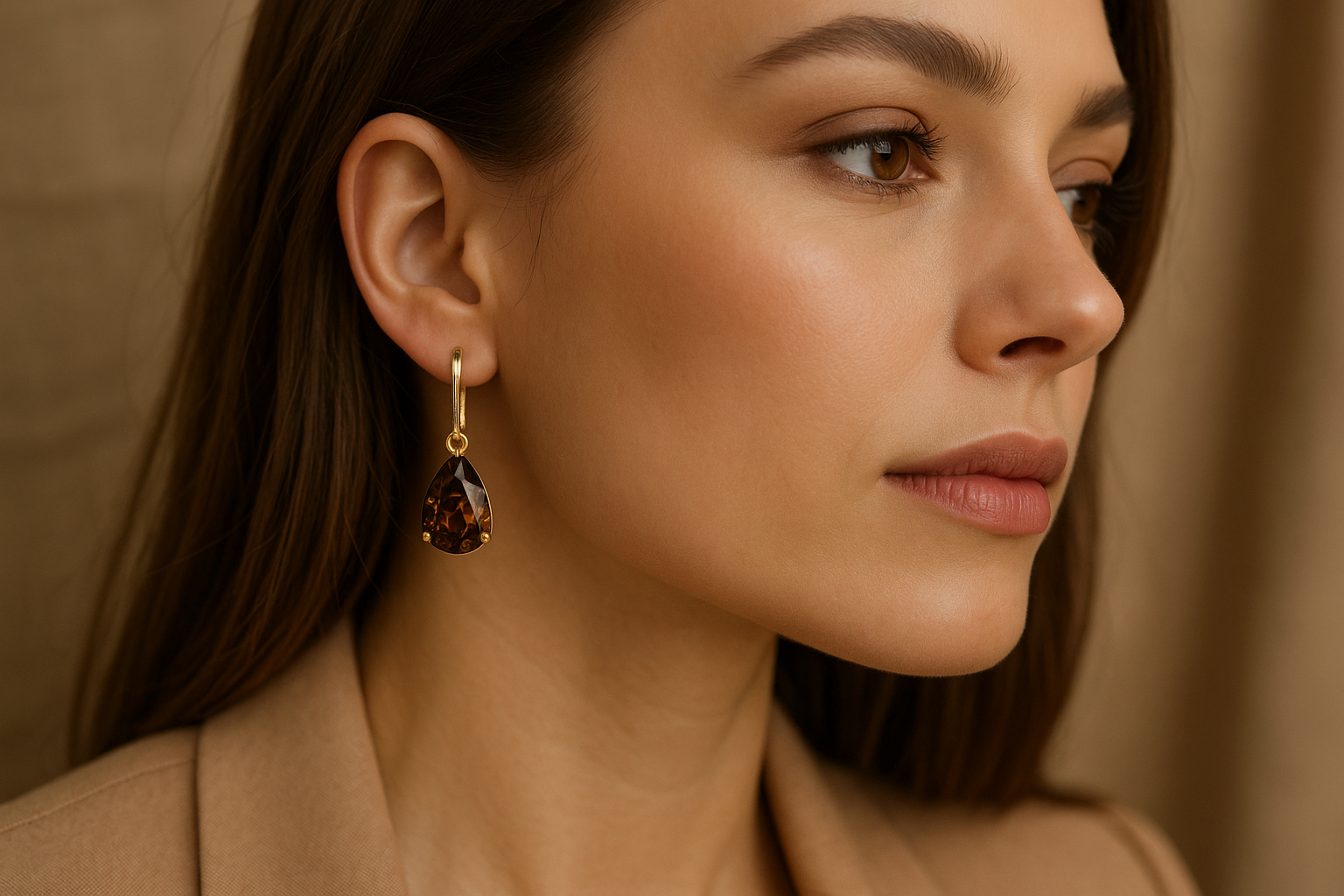
A darker, richer diamond, standing out for its luxury and warmth. Perfect for luxury jewelry. Collectors and investors value diamonds, especially in brown shades, for their uniqueness and symbolic luxury.
- Brown Garnet (hessonite, andradite)

Hessonite – an orange or brown garnet, known as the “cinnamon stone”, characterized by strong energetic properties. Andradite – a darker, greenish-brown garnet with a strong luster.
- Smoky Quartz A transparent, soft grayish-brown gemstone, popular for its versatility and affordable price. Often used in everyday jewelry and talismans.
- Tiger’s Eye A golden, brown, striped stone featuring a play of light reminiscent of a tiger’s gaze. Considered a protection talisman, often used in bracelets and pendants.
- Amber An organic gemstone, usually yellow or orange, but also found in darker, brown shades. Valued for its warmth, lightness, and unique inclusions. Popular in Lithuania.
- Brown Apatite A transparent, yellowish-brown, rare gemstone with a subtle shine. Mostly collected, but also used for jewelry.
- Brown Topaz (imperial topaz, smoky topaz) Imperial topaz – a very rare, golden or brown shade of topaz, considered one of the most valuable topazes. Smoky topaz – a softer, grayish-brown. Both are used in luxury rings and earrings.
- Brown Zircon A dark brown, amber-toned stone, one of the oldest in the world, characterized by strong luster and hardness. Often used in classic jewelry.
- Brown Opal A dark brown stone with a unique play of colors, often shining with various hues. Valued by collectors and jewelry designers.
- Brown Moonstone A light brown stone with a pearlescent shine, rare, and calming. Used in pendants and rings.
- Brown Tourmaline (dravite)

Dravite – a brown variety of tourmaline, strengthens connection with the earth, and calms. Often used for talismans, bracelets, and rings.
Symbolism of the Brown Color
The color brown symbolizes stability, reliability, and a connection with nature. A gemstone of this color is often chosen by people who value peace and groundedness.
Jewelry with Brown Gemstones
Jewelry with brown gemstones looks subtle and elegant. It is suitable for both everyday wear and special occasions. Such jewelry has been valued for a long time for its subtlety and elegance. These pieces are perfect for certain special occasions.
Gemstone Rings

Rings with brown-toned gemstones are an excellent choice if you want originality. Such rings stand out for their warmth and coziness.
Transparent Brown Gemstones
A transparent gemstone, such as smoky quartz, can reveal the full beauty of brown shades. A transparent gemstone of various colors is often valued for its play of light.
Gemstones by Birth Date and Zodiac
Many people choose gemstones according to their birth date or zodiac sign, believing that such a stone can provide additional energy, protection, or luck. Brown gemstones can also be chosen as personal talismans corresponding to the birth month or zodiac sign.
Gemstones by Birth Date
A stone by birth date is an old custom of choosing a talisman corresponding to a person’s birth month. Pearls are also assigned to some birth months and are considered special talismans. Brown gemstones, such as smoky quartz or amber, are often chosen as alternatives to traditional stones due to their symbolism and protective properties.
Gemstones by Zodiac
A stone according to the zodiac sign also has a strong significance. For some zodiac signs, ruby is recommended, symbolizing passion, strength, and love, but brown gemstones, such as tiger’s eye or dravite, are often chosen for their protective and calming properties. A talisman according to the zodiac sign often helps to strengthen personal qualities and provides additional energy.
Diamonds and Their Colors
Diamonds are among the most popular gemstones in the world. Brilliants are specially cut diamonds that stand out for their exceptional brilliance and are often chosen in jewelry. Sapphire, like diamond, is also one of the most popular gemstones, valued for its color, symbolism, and historical significance. They can be not only white but also brown – ranging from champagne to cognac shades.
The Value of a Diamond Depends on Color
The price of a diamond depends on its color, quality, and carat weight. No two diamonds are exactly alike, making each one unique. Brown diamonds are often cheaper than white ones, but their uniqueness provides exclusivity.
Use of Brown Stones in Jewelry
Jewelers often choose brown stones when creating both classic and modern jewelry. Brown gemstones stand out for their color and give jewelry exclusivity. They pair perfectly with yellow gold but can also be combined with white gold. Emerald is also often combined with brown gemstones to achieve an exceptional effect.
Trendy Combinations
In recent years, it has been extremely popular to choose rings with brown diamonds or tiger’s eye. Such stones add character and exclusivity.
Talismans and Protection
Talismans by birth date or zodiac are often made from brown stones because they symbolize protection and peace.
Energetic Properties
Each brown gemstone has its own energetic effect:
- Tiger’s Eye gives courage,
- Smoky Quartz calms,
- Amber protects from negative energy.
Gemstones and Their Collection
Collecting gemstones can be not only an interesting hobby but also a great investment. Collectors often choose gemstones for their unique properties, colors, or shapes, while those looking for investment value often choose diamonds. Some stones, such as diamonds, sapphires, emeralds, or rubies, are highly valued for their rarity and historical value.
Meaning of collecting
Gemstones can be collected as works of art, investment objects, or as symbols of status and wealth.
Evaluation criteria
It is important to pay attention to the authenticity, quality, and value of the stones so that the collection is not only beautiful but also valuable.
Investment value
Some gemstones, especially rare or historical ones, gain significant investment value over time. Collecting allows you to get to know the world of gemstones more deeply and discover true miracles of nature.
Gemstones and Their Storage
Gemstones and their storage are a crucial aspect of maintaining the stones’ beauty and value over the years. Diamonds are among the hardest minerals in the world, yet even they can be damaged if not stored properly. Other gemstones, such as sapphires, emeralds, or rubies, also require special attention – their value can be very high, so it is important to ensure proper protection against scratches, impacts, or unfavorable environmental factors.
Stones, especially those that are softer or have natural inclusions, should be kept in separate boxes or pouches to prevent scratching. Diamonds are very hard, but they can scratch other stones, so it is important to store them separately. It is also worth avoiding humidity, direct sunlight, and sudden temperature changes, as these can damage the structure or color of the stones. Gemstones like sapphires, emeralds, and rubies are often inherited from generation to generation, so their storage is not only a practical but also an emotional issue – properly maintained stones can retain their value and beauty for many years.
How to Care for Brown Gemstones?
The care of gemstones depends on their hardness and properties. To maintain the beauty and longevity of the stones, it is recommended to follow these steps:
- Determine the stone’s hardness – a diamond is extremely hard, while an opal is fragile, so care differs.
- Clean gently – use a soft brush and warm water, avoid strong chemicals.
- Protect from impacts – especially if the stone is fragile (e.g., opal, amber).
- Store separately – to prevent stones from scratching each other, keep them in separate boxes or pouches.
- Regularly check jewelry mountings – to ensure the stone does not fall out of the jewelry.
Tips on How to Choose

When choosing a brown gemstone, pay attention to the following aspects:
- Clarity – the clearer the stone, the more valuable it is.
- Color intensity – brighter shades are often valued more.
- Quality – assess whether there are cracks, chips, or other defects.
- Origin – natural stones are valued more than synthetic ones.
- Purpose of use – think about whether the stone will be worn daily or on special occasions.
It is also worth mentioning that some brown gemstones have been valued since ancient times for their color and symbolic meaning.
Conclusions
Brown gemstones can become not only a style detail but also a talisman. They combine the peace of nature, luxury, and uniqueness. By choosing brown gemstones, you can discover not only beauty but also a special symbolic and energetic value.