Diamonds Top 100 Questions – Comprehensive Buyer’s Guide (FAQ)
ABOUT DIAMONDS
1. What is a diamond?
A diamond is the hardest natural mineral, consisting of pure carbon crystal.
2. What is the difference between a diamond and a brilliant?
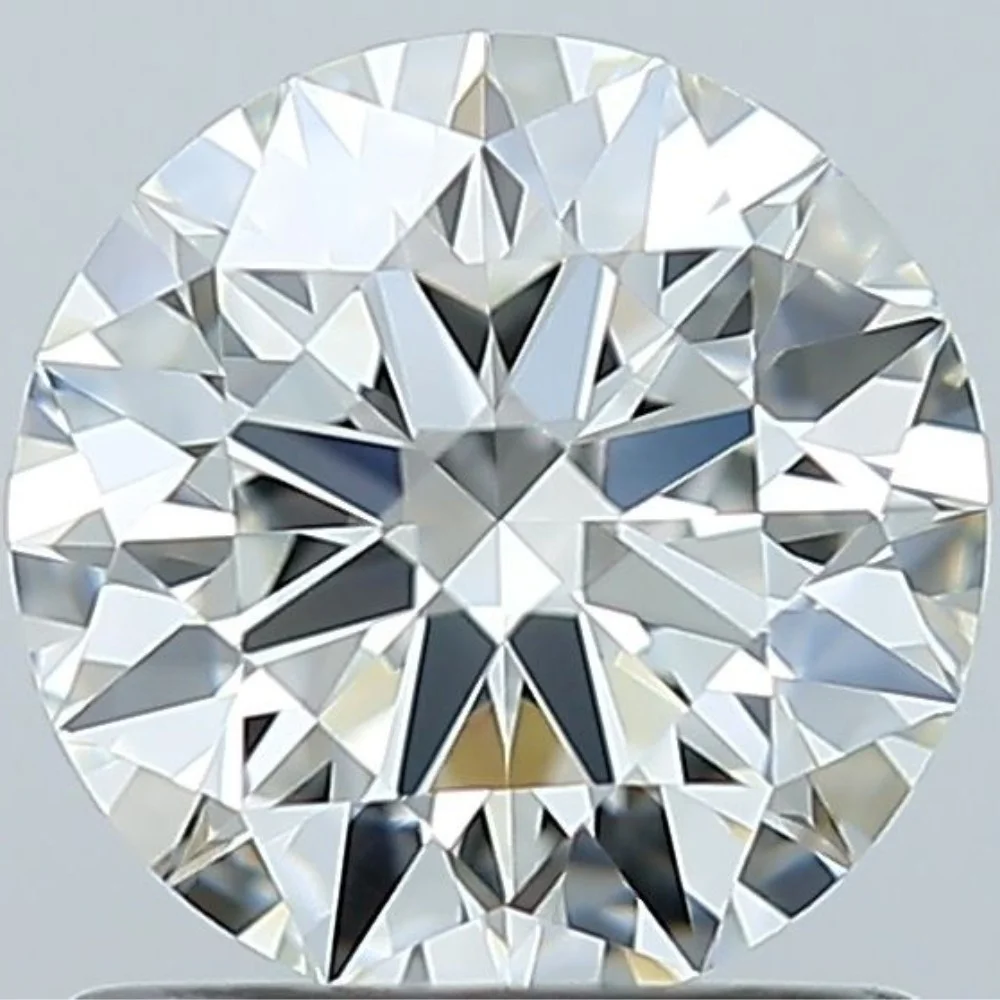
Both a diamond and a brilliant are gemstones. A brilliant is a specially cut diamond of a round shape, which becomes a brilliant after specific processing. The differences between diamonds and brilliants are often discussed, emphasizing their shape, cut, and value characteristics.
3. Are all diamonds brilliants?
No, a brilliant is just one of the many diamond cut shapes.
4. Can a diamond scratch gold?
Yes, a diamond scratches all other materials.
5. Can a diamond chip?
Yes, from a strong impact at the wrong angle.
DIAMOND 4Cs – QUALITY CRITERIA
6. What are the diamond 4Cs?
Carat (size), Color (color), Clarity (purity), Cut (cut quality).
7. What is the most important factor when choosing a diamond?
The cut – it determines all the brilliance and sparkle.
8. What is the best diamond clarity?
IF – VVS1 is considered visually ideal.
9. What is the best diamond color?
D–F – colorless, the highest grade.
10. What is an Excellent cut?
It is the highest diamond cut quality (Ex).
CARATS AND SIZE
11. What is a carat?
It is the unit of measurement for a diamond’s weight (1 ct = 0.2 g).
12. Is a larger carat always more beautiful?
No, not only size but also the cut is important.
13. What is the most popular carat size for engagement?
0.50–1.00 ct.
14. Does a 1 ct diamond look large?
Yes, it is a classic and noticeable size. It can be 6.20–6.50 mm.
15. Can the shape make a diamond look visually larger?
Yes – oval, pear, and marquise shapes appear larger.
🔹 PRICES
16. How much does a 1 ct diamond cost?
From €1,500 to €20,000, depending on quality.
17. What determines the price the most?
The 4C parameters and the certificate.
18. Why do two identical carats cost differently?
Due to differences in color, clarity, and cut.
19. Are diamonds cheaper online?
Often – yes. When buying diamonds online, you can find a wider selection or better prices than in physical stores, as well as choose a diamond that fits your needs.
20. Can you buy a diamond without a certificate?
You can, but it is not recommended.
CERTIFICATES
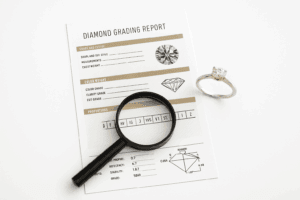
21. What is a GIA certificate?
It is the most reliable international diamond certificate.
22. What is an IGI certificate?
An international certificate, also common for lab-grown diamonds.
23. What is an HRD certificate?
A well-known and reliable diamond certificate in Europe.
24. Does a certificate increase value?
Yes, a certified diamond is always more valuable.
25. Can you check a certificate online?
Yes, using the unique number:
- GIA certificate – check here
- HRD certificate – check here
- IGI certificate – check here
NATURAL AND LAB-GROWN DIAMONDS
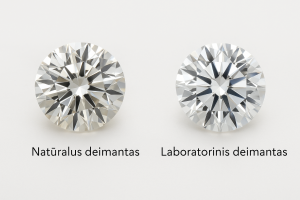
26. What is the difference between a natural and a lab-grown diamond?
The origin differs, but not the chemical composition.
27. Is a lab-grown diamond real?
Yes, it is a 100% real diamond.
28. Is a lab-grown diamond cheaper?
Yes – up to 70% cheaper.
29. Do lab-grown diamonds have certificates?
Yes – usually IGI.
30. Are lab-grown diamonds suitable for engagement?
Yes, they are being chosen more and more often.
ENGAGEMENT RINGS
31. Is a brilliant suitable for an engagement ring?
Yes, it is the most popular choice.
32. What stone is most commonly chosen for engagement?
Diamond.
33. Can you choose a shape other than a brilliant?
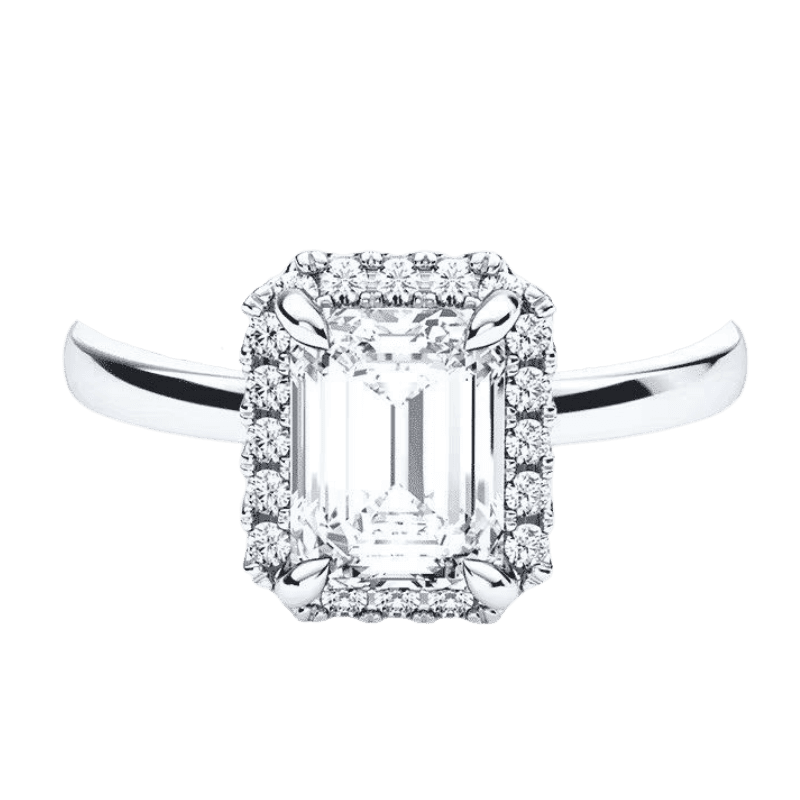
Yes – oval, pear, emerald, princess, etc.
34. Can a ring be made from your own gold?
Yes.
35. Can a ring size be adjusted after the engagement?
Yes, most rings can be resized.
DIAMOND SHAPES
36. Does an oval diamond look larger than a round one?
Yes, it visually looks larger.
37. Does the princess shape sparkle a lot?
Yes.
38. Is the emerald shape less sparkly?
Yes, it flashes and has a different kind of luster rather than sparkle.
39. Does the pear shape elongate the finger?
Yes, it visually lengthens the finger.
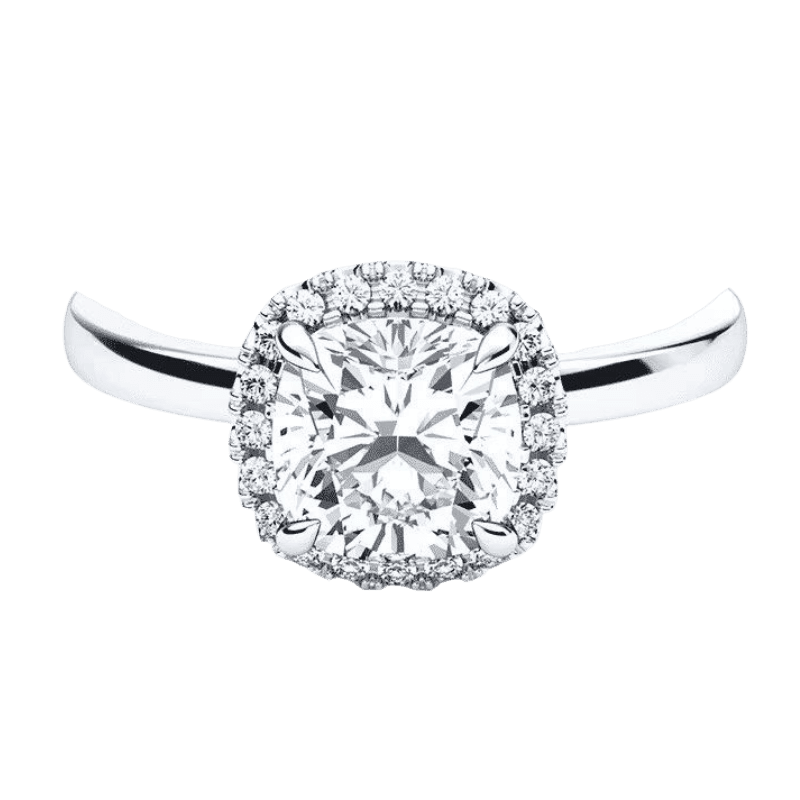
40. Is the cushion shape romantic?
Yes, it is a classic cut with soft lines.
DAILY WEAR
41. Is a diamond suitable for daily wear?
Yes, it is a durable stone.
42. Is a diamond afraid of chemicals?
Yes, it can lose its brilliance.
43. Can you exercise with a diamond?
It is not recommended.
44. Does a diamond scratch?
No, but it can get dirty. Or a diamond can be scratched by another diamond.
45. Does a diamond need regular cleaning?
Yes.
CARE
46. How to clean a diamond ring?
With warm water, soap, and a soft brush.
47. How often to clean?
Every 1–2 months.
48. Can it be cleaned with ultrasound?
Yes, if there are no fractures.
49. Can diamonds lose their shine?
Only from dirt.
50. Is professional cleaning recommended?
Yes.
INVESTMENT
51. Is a diamond an investment?
Yes, if it is high grade.
52. Which diamonds hold their value best?
1 ct+, GIA certified, color D–F, VS1+.
53. Are lab-grown diamonds suitable for investment?
No, only natural ones.
54. Are colored diamonds investment-grade?
Yes, especially pink and blue ones.
55. Can diamond value drop?
In the short term – yes.
ONLINE PURCHASING
56. Is it safe to buy a diamond online?
Yes, if there is a certificate and a return policy.
57. Can you return a diamond?
Yes, within 30 days.
58. Can you see the diamond live in the showroom?
Yes.
59. Can you reserve a diamond?
Yes.
60. Can you buy in installments?
Yes.
JEWELRY
61. Are diamonds suitable for earrings?
Yes.
62. Are diamonds suitable for pendants?
Yes.
63. Can I set my own diamond?
Yes.
64. Can I reset a diamond from an old ring?
Yes.
65. Can I have a custom design made?
Yes. Colored diamonds are distinguished not only by their exceptional colors but also by their unique properties and rarity.
COLORED DIAMONDS
66. Do colored diamonds exist?
Yes – pink, blue, yellow, green.
67. Are colored diamonds more expensive?
Yes, some are extremely expensive.
68. Is the color recorded in the certificate?
Yes.
69. Can color be artificially produced?
Yes.
70. Are colored diamonds suitable for engagement?
Yes, a very unique choice.
TECHNICAL QUESTIONS
71. What is fluorescence?
The diamond’s glow under UV light.
72. Is fluorescence bad?
Not always – it can even improve the appearance.
73. What are polish and symmetry?
These are criteria for processing precision.
74. What is the bow-tie effect?
A dark zone in oval and pear shapes.
75. Is it considered a defect?
Yes, if it is prominent.
PRACTICAL QUESTIONS
76. Can a diamond fall out of a ring?
Yes, if the setting weakens due to mechanical damage.
77. Does the ring need to be checked annually?
Yes.
78. Can a ring with carats be resized?
Yes, but it depends on the model.
79. Can I replace a diamond with a larger one later?
Yes.
80. Can I order engraving?
Yes.
FOR FASHIONGOLD.LT CLIENTS
81. Are all diamonds certified?
Yes.
82. Can a ring be made according to a 3D model?
Yes.
83. Can I choose a diamond from the exchange?
Yes.
84. Can I choose a lab-grown diamond?
Yes.
85. Is a warranty provided?
Yes.
ADDITIONAL QUESTIONS
86. Is a diamond suitable for an anniversary?
Yes.
87. Is a diamond suitable for a christening?
Yes.
88. Is a diamond suitable for a man?
Yes.
89. Are diamonds bought as family heirlooms?
Yes.
90. Does a diamond symbolize eternity?
Yes.
FINAL QUESTIONS
91. Can a diamond be inherited?
Yes.
92. Are diamond prices the same in all countries?
No.
93. Can a diamond ring be insured?
Yes.
94. Is a diamond afraid of heat?
Only extreme temperatures.
95. Is a diamond suitable for daily wear for a lifetime?
Yes.
96. Can a diamond be combined with other gemstones?
Yes.
97. Does a diamond always have to be white?
No.
98. Can a small diamond be very valuable?
Yes.
99. Is every diamond unique?
Yes.
100. Is a diamond an eternal gift?
Yes – it is one of the most durable and meaningful gifts.
101. Is a diamond considered a symbol of eternal love?
Yes. A diamond symbolizes eternity, loyalty, and an unbreakable bond.
102. Why are diamonds considered a symbol of luxury?
Due to their rarity, price, durability, and exceptional brilliance.
103. Are diamonds more than just a piece of jewelry?
Yes. They often become family heirlooms, investments, and emotional values.
104. How to choose the perfect diamond for a life occasion?
For engagements, 0.50–1.00 ct is usually chosen, for anniversaries – larger ones, and for daily wear – subtle stones.
105. What does the price of diamonds depend on?
On the 4C parameters (carat, color, clarity, cut), the certificate, and origin.
106. How does the price of a 1-carat diamond differ from other sizes?
The 1 ct threshold is psychologically important, so the price often rises non-proportionally to the weight.
107. How do brilliants stand out in jewelry?
Brilliants feature maximum sparkle due to their round cut and precise proportions.
108. Why are diamonds considered a form of investment?
Because high-quality natural diamonds maintain or increase in value over time.
109. How to choose an investment diamond?
It is recommended to choose 1 ct+, D–F color, VS1+ clarity, with a GIA certificate.
110. Why are colored diamonds considered unique?
Due to their natural rarity and limited quantity in the market.
111. What is the difference between the price of a lab-grown diamond and a natural one?
Lab-grown diamonds cost up to 70% less.
112. Can gemstones be an alternative to diamonds?
Yes – sapphires, emeralds, and rubies are often chosen instead of diamonds.
113. How to recognize a truly high-quality diamond?
You need to check the certificate, 4C parameters, and visual brilliance.
114. Can a diamond be chosen according to a budget?
Yes – diamonds are selected for both economical and luxury solutions.
115. Why is it said that a brilliant is forever?
Due to its strength, unchanged form, and symbolic meaning.
116. Why are diamond rings considered a timeless classic?
Because a diamond pairs with all metals and styles.
117. Are diamond earrings and pendants suitable for daily wear?
Yes, these are versatile pieces for everyday wear.
118. Does every diamond have its own story?
Yes – every diamond has a unique origin and journey to the jewelry piece.
119. What characterizes diamonds as a gemstone?
Hardness, brilliance, durability, and high value.
120. What characterizes brilliants as a cut?
Symmetry, maximum light reflection, and the brightest sparkle.
121. Which is more valuable – a diamond or a brilliant?
A brilliant is a diamond, but its value is increased by a high-quality cut.
122. Are there educational sessions about diamonds?
Yes, special educational events and tastings take place.
123. Do gift diamonds (0.012–0.036 ct) have value?
Yes, it is a symbolic gift with emotional value.
124. Can a diamond be chosen based on its shape?
Yes – the shape is chosen according to taste, finger type, and purpose.
125. Why are colored diamonds considered rare and luxurious?
Due to the extremely low natural supply in the global market.
126. Do gemstones have not only aesthetic but also symbolic meaning?
Yes – they are associated with emotions, energy, and life stages.
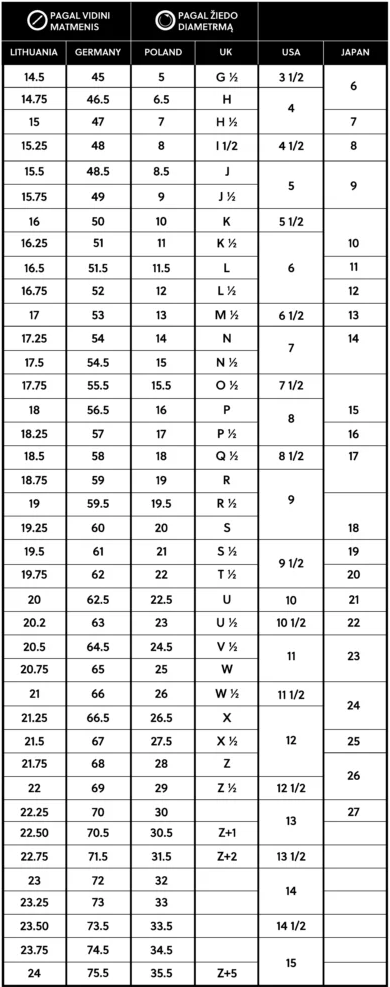
127. Can a ring size be measured online?
Yes – an online ring size guide is used.