4Cs of Diamond Quality according to the GIA Gemological Institute
Diamonds – A Wonder of Nature
There is no other gemstone quite like a diamond. The name diamond comes from the Greek word ‘adamas’, which means invincible and symbolizes the diamond’s unbreakability. Diamonds are found in the most remote places on Earth, and it is a kind of miracle that they form at all. To extract half a carat of rough diamond, about a ton of rock needs to be processed; for this very reason, diamonds are considered one of the rarest and most desired gemstones in the world. Among all gemstones, the diamond stands out for its hardness and symbolic value. A diamond is proof of endurance and strength – it is no wonder that it is considered a symbol of love.
4Cs: Carat – The Importance of Weight
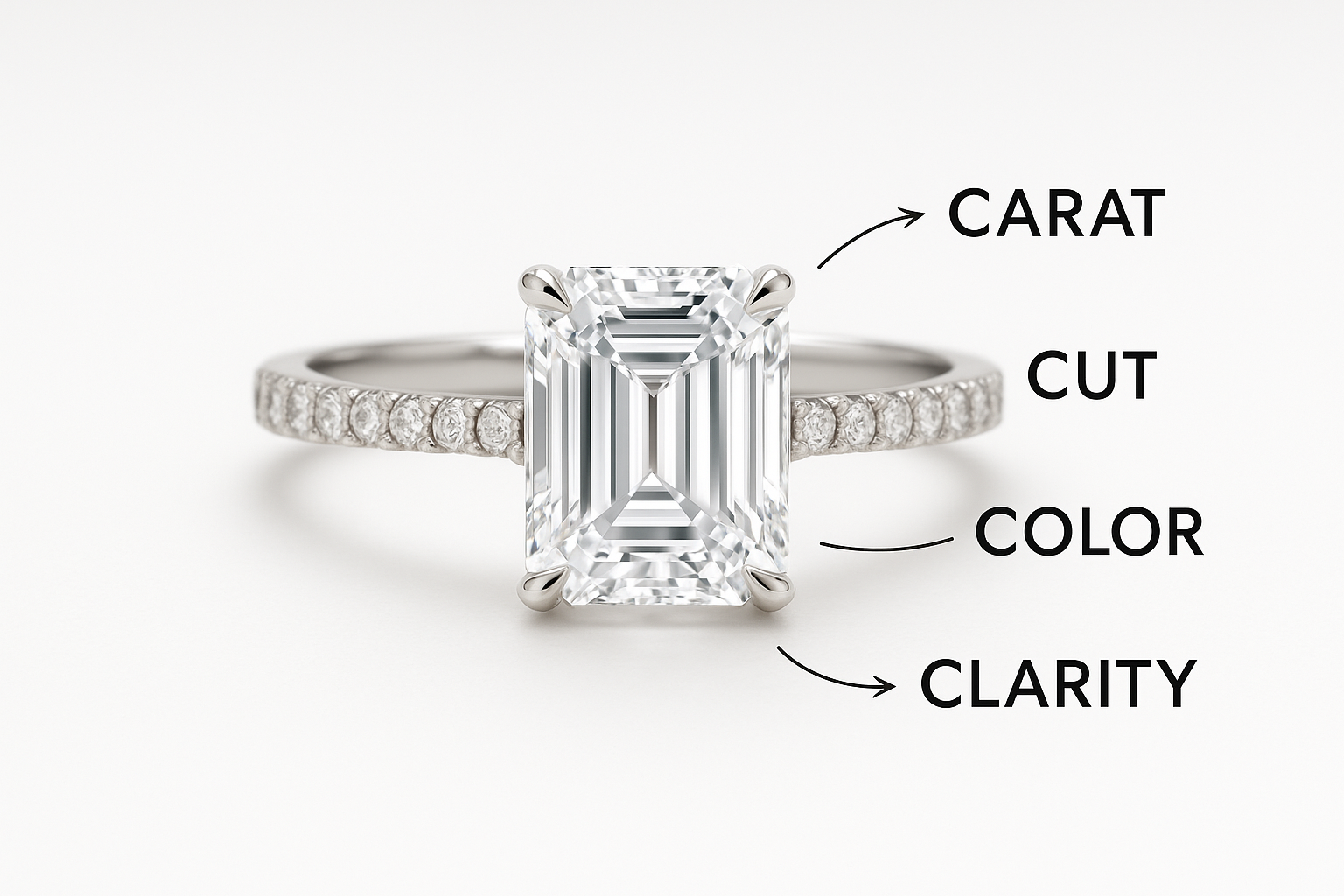
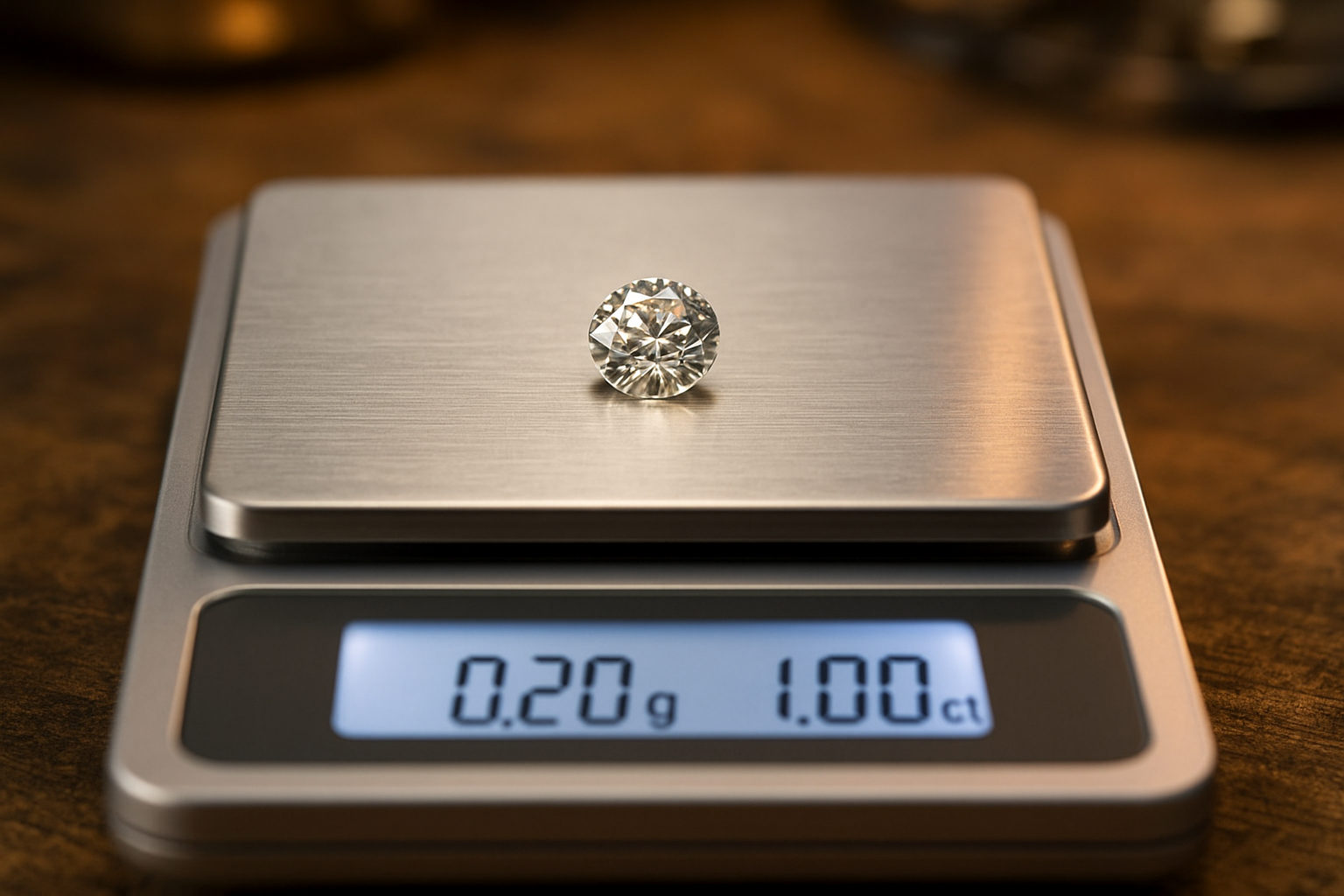
Carat is one of the main factors by which a diamond is valued. A diamond’s carat is measured in carat units, where one carat equals 0.2 grams. Diamonds can range in size from extremely small to impressively large, but the greater the carat weight of a diamond, the rarer and more valuable it is. Larger diamonds often become the main accent of a piece of jewelry, especially in engagement rings or luxurious necklaces. Carat size can be a decisive factor when choosing a diamond, as it directly impacts both the stone’s value and its visual impression. Diamonds with higher carat weights are especially valued by collectors and investors, as their rarity and exclusivity lead to higher market demand.
The beauty of a diamond and its evaluation according to the 4C standard provide an opportunity to objectively compare and assess diamonds; however, numbers alone cannot describe a diamond’s mysterious and enchanting beauty – for that, you will need to visit a jeweler to see it with your own eyes. The diamond itself can be evaluated by various criteria, but a brilliant is the same diamond, only processed in a special way.
Timeless. Every diamond is unique. Each reflects its arduous journey from the depths of the earth to a precious piece of jewelry. However, all diamonds have certain characteristics that allow us to compare and evaluate them. These characteristics are called the 4Cs. Diamonds are perfect for both investment and special occasions. Sometimes diamonds are used not only in jewelry but also in spiritual practices.
4Cs: Color – Color Scale and Evaluation
The GIA diamond grading color scale is arranged alphabetically and starts from the letter D (colorless diamond) to Z (light yellow or brown diamond hue). Although many people think that high-quality diamonds are colorless, few know that colorless diamonds are very rare. Most diamonds used in jewelry are nearly colorless, white, or have yellow or brown tints.
Determined by a gemologist by comparing the diamond being certified with a master set of samples. Each letter represents a color range and indicates a specific color.
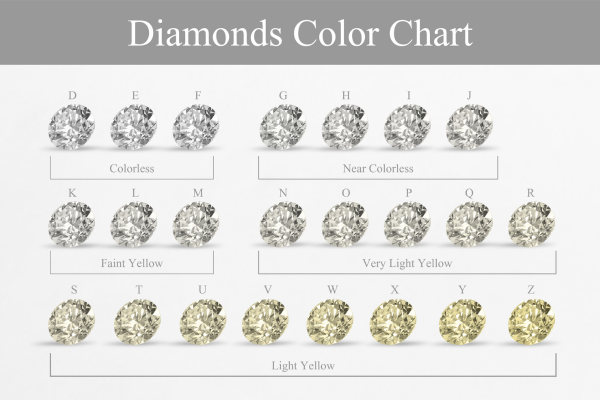
Diamond color is one of the four main criteria for diamond value, which can significantly influence the stone’s appeal and price.
Diamonds come in various colors – from completely colorless to subtly yellowish or even bright colors called “fancy” diamonds. Colored diamonds, such as pink, blue, or yellow, are especially rare and valued for their uniqueness. Colored diamonds can also be very expensive due to their rarity. When choosing a diamond, it is worth considering the color nuances, as they can give the stone uniqueness and exclusivity, and color often becomes the main accent when creating exceptional jewelry.
Diamond Fluorescence
Some diamonds can emit a glow under ultraviolet rays, which affects the color of diamonds in daylight. Fluorescence is not a factor that determines the grade of color or clarity. The strength and color of a diamond’s fluorescence are provided in GIA reports as an additional identification characteristic.
4Cs: Clarity – Natural Inclusions and Their Influence
Clarity is another important aspect of diamond quality that determines both its beauty and value. Diamonds can have natural inclusions – small minerals or other materials formed inside the diamond over millions of years. These inclusions can vary – from barely noticeable to larger ones visible to the naked eye. The fewer inclusions a diamond has, the clearer and more valuable it is. Clarity can be a decisive factor when looking for an exceptional stone, as diamonds with a high clarity level are more frequently used in luxury jewelry. However, even diamonds with small inclusions can be very beautiful and unique, as every stone is one of a kind in the world.
Diamond Clarity or Diamond Purity
The GIA clarity scale includes eleven clarity grades, ranging from Flawless to I3, where inclusions are visible to the naked eye. Since diamonds form under high temperature and pressure, it is extremely rare to find diamonds without any internal or external inclusions. A diamond is formed from pure carbon, and the role of carbon is essential in the diamond’s structure. Inclusion characteristics are a consequence of diamond formation, which helps gemologists distinguish natural diamonds from synthetic and imitation ones and identify individual stones. Diamonds form between other mineral and rock layers.

4Cs: Cut – The Importance of Shape and Brilliance
Cut is one of the most important indicators of diamond quality, as it determines how the diamond will reflect light and reveal its true beauty. Diamonds can be cut into various shapes – from the classic round brilliant to the modern princess, elegant heart, or expressive emerald shape. Each shape has its unique charm and can be tailored to individual style. A well-cut diamond is not only sparkling but also appears larger and brighter, making it a more common choice as the main stone in jewelry. Cut quality determines whether a diamond will look alive and shimmering or lose some of its charm. Therefore, when choosing a diamond, it is worth paying attention not only to carat or color but also to the craftsmanship of the cut, which can be a decisive factor in achieving exceptional brilliance.
The GIA cut scale ranges from “Excellent” to “Poor”. The beauty of a polished diamond lies in its interaction with light. This impressive sight consists of three properties:
- Brightness – the combination of all white light reflecting from the surface and interior of the diamond.
- Fire – describes the flashes of color emanating from the diamond.
- Scintillation – describes the pattern of light and dark areas and the sparkle you see when the diamond, light, or observer moves.
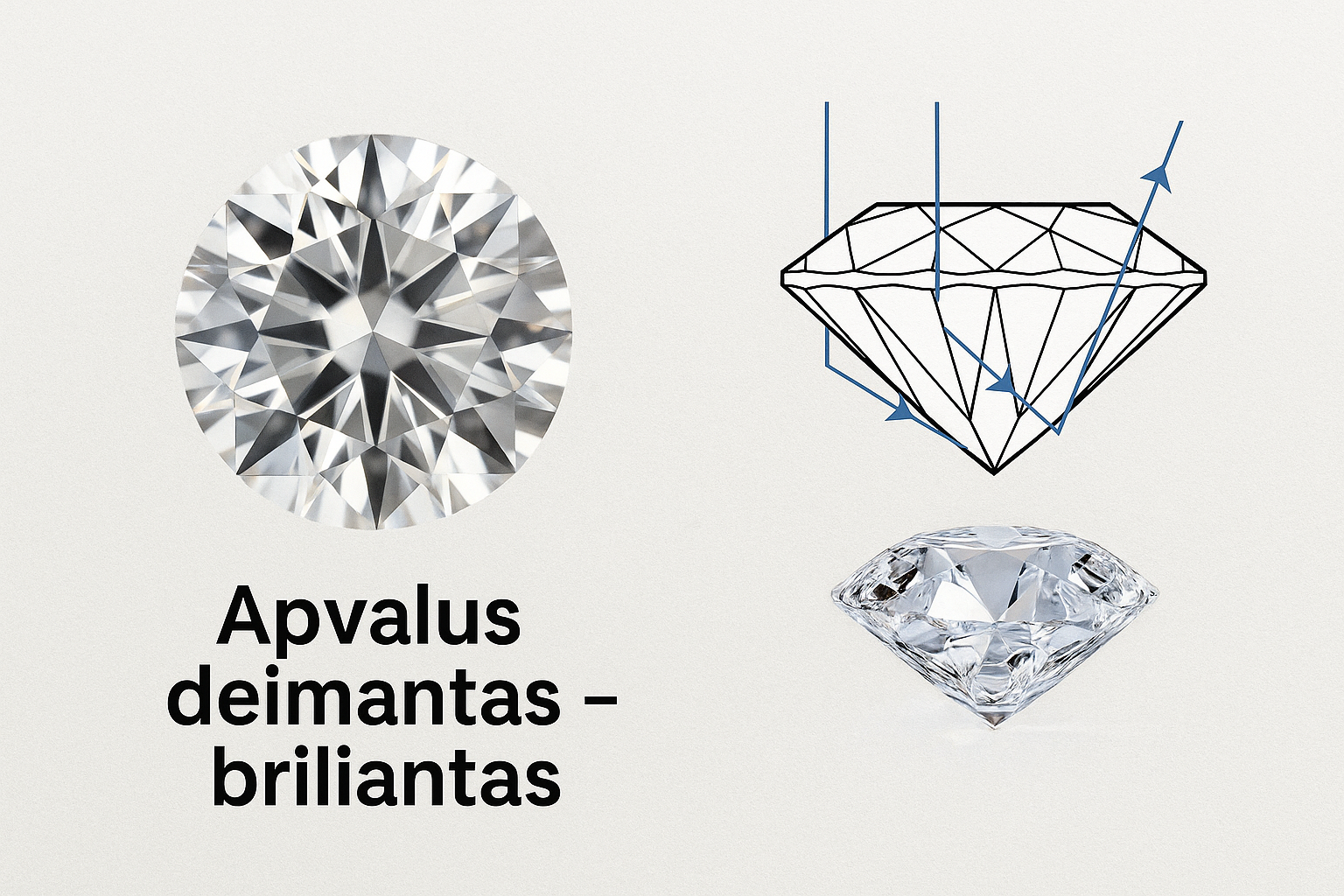
A diamond processed with a brilliant cut is called a brilliant, and it is this cut that perfectly highlights the stone’s brilliance. A diamond’s proportions affect its light reflection, which in turn reflects its beauty and overall appeal. Diamonds of different cuts differ in their light reflection and sparkle. Diamonds with excellent proportions, symmetry, and polish interact better with light and have greater brightness, fire, and scintillation. The GIA laboratory evaluates these factors for round diamonds – brilliants – in the D-Z color range.
How the GIA Laboratory Evaluates Your Diamond
GIA has been entrusted with evaluating some of the world’s most famous diamonds, and the same expertise is applied when evaluating your diamond. The independent and non-profit GIA laboratory is considered the final word on diamond authenticity and quality. GIA created the 4Cs and the International Diamond Grading System™, a standard used worldwide. GIA inspects every gemstone to identify synthetic, imitation diamonds, and known treatments. Expert gemologists examine each diamond under controlled lighting and viewing conditions to provide the most accurate 4C assessment. Every GIA grading report provides these assessments along with additional descriptive information and state-of-the-art security features. Diamond value can grow over time, especially during long-term investments. Buying a diamond is an important decision. Before purchasing a diamond, it is worth consulting with a specialist. You can choose from various types and shapes of diamonds, depending on your needs. GIA certificates allow you to make the decision with confidence.
For more information, visit GIA.edu
Diamond Characteristics and Uses
A diamond is not only an exceptional gemstone but also a symbol of eternity, loyalty, and luxury that has fascinated people around the world for centuries. Diamonds are valued not only for their unique beauty but also for their deep symbolic meaning – they are often given on special occasions, marking the most important events in life. However, a diamond is more than just jewelry – it can also be a reliable investment, as diamonds are rare, durable, and retain their value over time. Due to their exceptional properties, such as extreme hardness, dazzling brilliance, and diverse color, diamonds are used not only in jewelry but also in industry – from cutting tools to high technologies. Thus, the characteristics and versatility of diamonds mean they are a symbol not only of beauty but also of value and reliability.