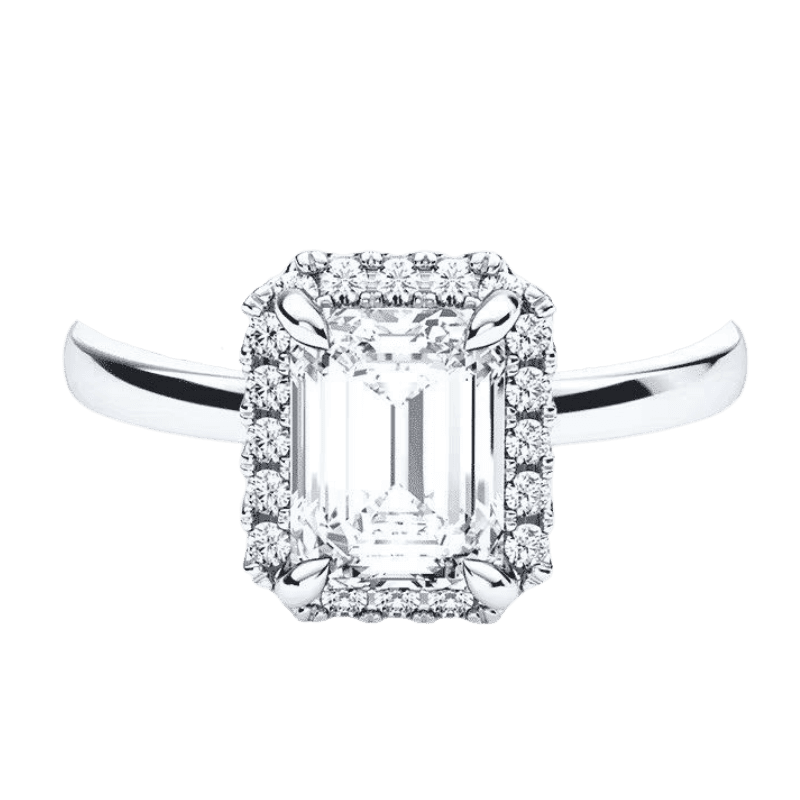
Diamonds are characterized by more than just stunning aesthetics. They are a symbol of love, romance, and longevity; they take one’s breath away and leave no one indifferent. The diamond is also called ‘adamas’ – this Greek word means ‘invincible’, emphasizing the diamond’s exceptional hardness and symbolic meaning.
Jewelry such as rings, diamond pendants or diamond earrings truly encourage one to pause for a moment in a busy world and immerse oneself in the magic they radiate. Diamond shapes and cutting methods determine their sparkle and aesthetic appeal. Greater investment in diamond quality or cut ensures its greater exclusivity and value.
The history of diamonds is complex
Have you ever wondered where these breathtaking gemstones came from? It turns out that they were once found in small quantities in India and Brazil. For a while, Indians believed these were the only sources of diamonds, but their mines were exhausted one day, and the small amount found in Brazil was not enough to satisfy the world’s needs.
Today, the largest diamond miners are Africans. As much as 65% of all the world’s gemstones are supplied from this continent. One carat equals 0.2 grams, so when a boy named Erasmus found one such 21.25-carat gemstone in 1867, he had no idea of the value of this natural mineral and sold it.
To reveal the beauty of a diamond, it must first be cut and processed. Therefore, jewelry such as diamond earrings did not appear immediately. All brilliants are diamonds, but not all diamonds are brilliants – a brilliant is not a separate mineral, but only a diamond that has been processed with a special cut and is considered one of the most beautiful types of diamonds. By the way, it has long been believed that these rarest gemstones in the world also emit extraordinary energy. It is claimed that only people with pure hearts can acquire them. However, there are many legends about shed blood and the mystical origin of diamonds themselves.
Diamond mining and processing
Diamond mining and processing are processes that require not only huge human and technological resources but also exceptional meticulousness. Diamonds are among nature’s rarest minerals, so searching for and extracting them is a very complex and expensive undertaking. Most diamonds are found deep in the Earth’s crust, where they form from carbon under immense pressure and high temperatures. Usually, diamonds are extracted from kimberlites – special rocks formed from magma found only in certain parts of the world, such as Africa, Russia, or Canada. Diamonds can also be found in river sediments, where they are carried by water from long-eroded kimberlite.
The diamond mining industry is very large and complex – thousands of people work here, the most advanced machinery is used, and every diamond found is carefully selected and evaluated. Besides natural diamonds, lab-grown diamonds, which are grown in laboratories by replicating natural conditions, are increasingly common today. However, natural diamonds still remain the most valuable and desirable.

Once the diamond is extracted, an equally complex processing stage begins. Due to their exceptional hardness, diamonds can only be processed with special tools, which are often made from diamonds themselves. Cutting and polishing require great experience and craftsmanship – this is the only way to achieve maximum diamond brilliance and reveal its beauty. Each diamond is unique, so masters carefully select the cutting shape to highlight its best features.
Diamonds are valued not only for their beauty – they are also indispensable in various industrial fields. Due to their hardness, diamonds are used in drilling, cutting, and grinding tools, and their powder is used for processing other diamonds or gemstones. Also, diamonds can be used in medicine, for example, in extremely precise surgical instruments or scientific research where exceptional accuracy and durability are required.
In summary, diamond mining and processing is a very complex and effort-intensive process, but that is precisely why diamonds are so valuable and desirable. They fascinate not only with their beauty but also with their exceptional properties, making them important in jewelry, industry, and even medicine.
Properties of diamonds
Diamonds are a true gift of nature, fascinating not only with their beauty but also with their exceptional properties. They are the purest form of carbon, formed under special conditions deep within the Earth. The crystalline structure of a diamond makes it the hardest natural mineral in the world – according to the Mohs scale, its hardness reaches 10 points. This means that a diamond can only be scratched by another diamond, which is why it is especially valued in both jewelry and industry.
Diamonds can come in various colors: from completely colorless and transparent to yellowish, bluish, gray, or even dark brown shades. Their color depends on impurities in the crystal lattice – for example, nitrogen or boron. Also, diamonds can be either completely transparent or opaque, and their luster is exceptionally adamantine, sparkling with all the colors of the rainbow, especially when light rays fall at a certain angle.
Although a diamond is very hard, it can also be brittle – a strong blow can shatter it. The density of a diamond is about 3.51, and its resistance to acids and alkalis is extremely high. However, at high temperatures (from 600 °C to 800 °C), a diamond can only be affected by oxygen or fluorine – in air, it burns at 800 °C and turns to ash, and without air, it turns into graphite. This shows how significantly a diamond’s properties differ from other forms of carbon.
Diamonds are found in nature in fragments of various rocks, where they are brought by water along with other gemstones and precious metals. The largest diamond found to date weighed as much as 621.2 g. Interestingly, diamonds form in volcanic pipes – downward-tapering craters filled with kimberlites, or in deep cracks in the Earth’s crust. Such an origin ensures that every diamond is unique and has its own story.
Diamonds cut in a certain way and completely transparent are called brilliants – these are the ones that fascinate most with their brilliance and play of light. However, most diamonds are used in industry: they are indispensable for drilling hard rocks, cutting glass, or polishing other gemstones. Diamond powder is also used for polishing diamonds themselves, as only they can overcome this exceptional hardness.
The mass of diamonds is measured in carats – 1 carat equals 0.2 grams. The larger the diamond, the rarer and more valuable it is. Due to their beauty, longevity, and value, diamonds have long been not only objects of jewelry but also investment assets. Experts predict that by 2030, diamond demand will grow by 1–4% annually, while supply will only grow by about 1%. This means that diamond prices can only rise, so investing in diamonds can be an excellent hedge against inflation or currency market fluctuations. If you are looking for a way to diversify your investment portfolio, diamonds can be a great choice – they retain value and fascinate with their exclusivity. By investing more in higher quality or larger diamonds, one can expect a higher return on investment and exclusivity.
The first diamond engagement rings

Rings have been used as a symbol of love and commitment for thousands of years. In ancient times, they were formed from twisted copper and braided hair, worn on the middle finger of the left hand. Sometimes rings were worn on different fingers or for different occasions, depending on traditions. Romans believed that the path to the heart leads through this finger. True, this did not necessarily mean unconditional love, but a promise – certainly.
In the Middle Ages, by order of the Roman government, all wedding ceremonies had to be celebrated in a church. At that time, rings showed not only intentions to marry but also social status: ornate and luxurious ones were allowed only for the elite. Today, an engagement ring can be special specifically for you because it reflects your personality and feelings. Before choosing an engagement ring, it is worth thinking about your personal needs and traditions.
Love and diamonds today

Bracelets, pendants, chains, cufflinks, or diamond earrings are luxurious accessories favored by the high society. However, they are suitable both for everyday wear and for solemn occasions. The energy they radiate can certainly attract attention, and today it is also one of the symbols of a declaration of love. A piece of diamond jewelry can be a special choice specifically for you if you are looking for an exceptional gift or an accent for your style.
It is not without reason that a diamond ring is associated with romance, love, and a lifelong promise. It is the hardest and most expensive mineral, whose value only increases over time (probably because it perfectly matches the meaning of love).
Diamonds are the most expensive minerals in the entire world. No other mineral can match the diamond in its value or strength. Because of this, jewelry such as rings or diamond earrings is not just a symbol of luxury or love; it is a part of a unique history. Choose from the wide range of the Fashiongold.lt jewelry store and find a piece of jewelry that will meet your needs or style, and feel exceptional, or give a gift that will never be forgotten.