Spinel – a gemstone long called “ruby”
This article is for everyone interested in gemstones, jewelry, or wanting to learn more about the properties and selection of spinel. In recent years, spinel has been increasingly valued for its naturalness and variety of colors.
Spinel is a natural oxide group gemstone (mostly magnesium-aluminum oxide), valued for its vivid colors, good transparency, and durability. Oxide group minerals are minerals containing compounds of oxygen and metal elements.
A brief history: why spinel has been a “ruby” for so long
For a long time, red spinels were called rubies because they are visually very similar, and distinguishing them requires gemological testing. This is why some of the most famous “rubies” in crowns are actually spinels.
Spinel colors: from red to black – the full spectrum
Red spinel

Historically, red spinel was called “ruby.” Its color ranges from raspberry to rich cherry, with warm or cool undertones. It is one of the most valuable spinel colors.
Pink spinel

From soft powder to bright neon pink. This color is especially popular in modern, feminine jewelry.
Blue spinel

The color can vary from grayish-blue to extremely rare cobalt blue, which is considered a collector’s and investment piece.
Violet and lavender

Elegant, subtle shades, perfect for individual, artistic jewelry.
Green spinel
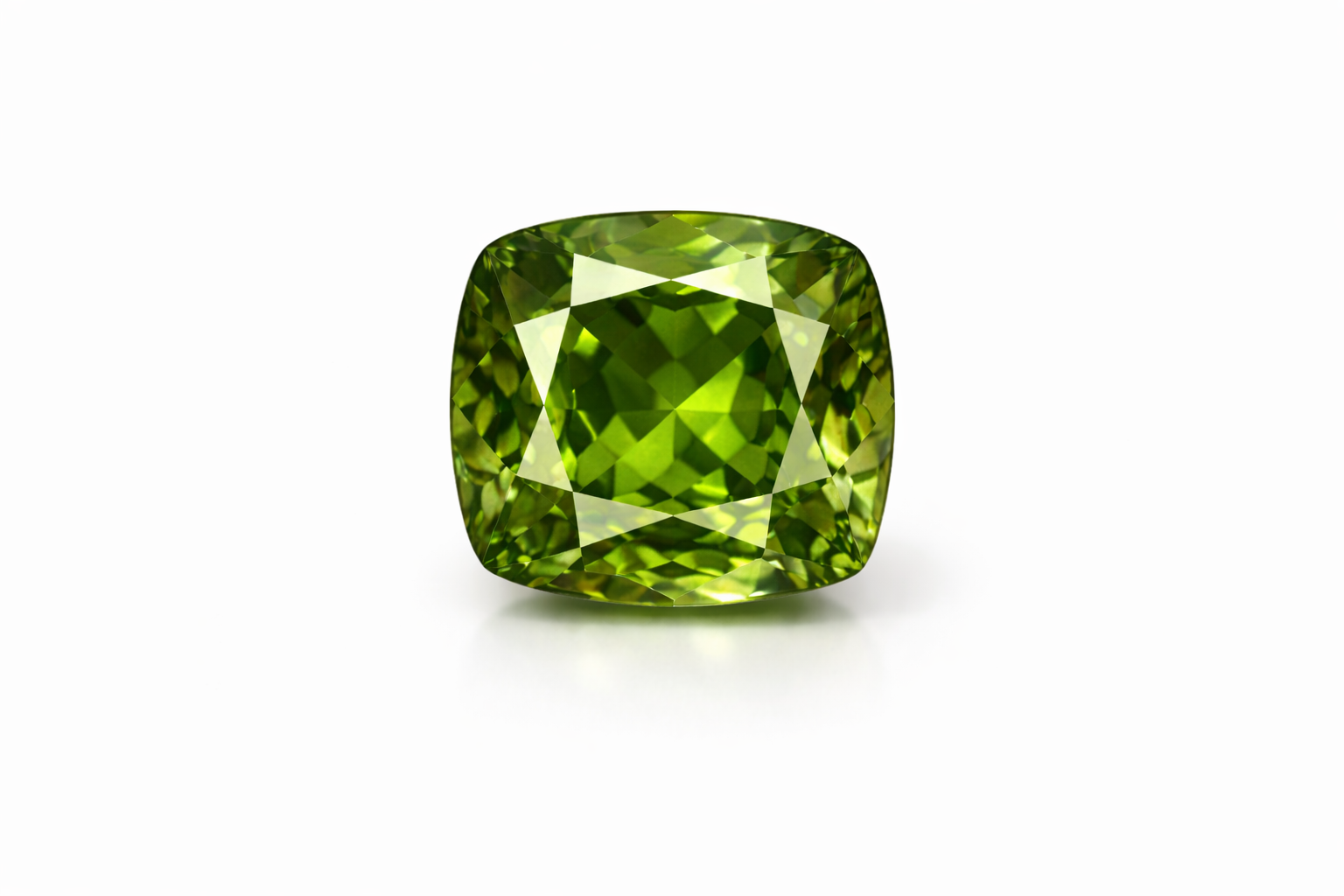
A rare color, often with a grayish or olive undertone, valued for its uniqueness.
Black spinel

Opaque or semi-transparent, often used in modern, minimalist jewelry.
Following this color spectrum, it is important to discuss other physical properties of spinel that determine its value and suitability for jewelry – transparency, hardness, and other quality criteria.
Transparency and quality
Transparency
High-quality spinel is transparent, with a strong vitreous luster. This is one of the characteristics that makes it visually very similar to ruby or sapphire.
Spinel crystals and clarity
Many spinels exhibit good clarity:
- often “eye clean”
- may have natural microscopic inclusions
- inclusions usually do not disturb the play of light
Hardness
Spinel hardness is ~8 on the Mohs scale (Mohs scale is a mineral hardness measurement system from 1 to 10), therefore it is:
- suitable for daily wear rings,
- scratch-resistant,
- long-lasting in jewelry.
Spinel history: the gemstone with a “mistaken identity”
For centuries, spinel was considered a ruby because:
- both stones are found in the same deposits,
- both can be rich red,
- gemological testing did not exist in ancient times.
It was only in the 19th century that it was scientifically proven that these are two different minerals.
The world’s most famous jewelry with spinel
“Black Prince’s Ruby”
One of the most famous stones of the British Crown – actually a red spinel, decorating the Imperial State Crown.
“Timur Ruby” (352.54 ct)
An impressively sized historical spinel with inscriptions, long considered a ruby.
Russian Great Imperial Crown
The stone at the top – also a massive red spinel, symbolizing imperial power.
Spinel vs ruby vs sapphire – how to distinguish?
Comparison table
| Feature | Spinel | Ruby | Sapphire |
|---|---|---|---|
| Mineral | Oxide | Corundum | Corundum |
| Hardness | ~8 | 9 | 9 |
| Treatment | Mostly none | Common | Common |
| Color variety | Very wide | Limited | Wide |
| Price | Lower | High | High |
How to choose spinel for jewelry, practical tips on how to distinguish
- Color: choose a rich, “clean” (without grayness) color – especially red, pink, or blue.
- Transparency and luster: spinel is most beautiful when the stone is “alive” – reflects light beautifully.
- Inclusions: natural inclusions can be normal, but in a ring, it is better if they are not near the surface or in the center.
- Durability: due to good hardness, spinel is perfect for everyday use, but (as with all gemstones) it is worth choosing a more secure setting if the stone is worn daily.
Who is spinel suitable for in jewelry?
- Engagement rings – especially red, pink, or blue.
- Everyday rings – due to durability.
- Exclusive, individual projects.
- An alternative to ruby or sapphire for those seeking uniqueness.
Why choose spinel?
- Natural, untreated color.
- Excellent price-quality ratio.
- Durable, suitable for daily wear.
- Rich history.
- Increasingly valued in the market.
From 2026, new requirements or standards regarding spinel trade or certification may come into effect.
The information in this article may not be copied without permission.