Introduction
This article is intended for future buyers, investors, jewelry enthusiasts, and anyone who wants to understand the differences between natural, lab-grown, and artificial (imitation) diamonds. If you are looking for an engagement ring, planning to invest in gemstones, or simply interested in jewelry, you will find all the most important information in one place.
In this article, we will discuss what a diamond is, the differences between natural, lab-grown, and artificial diamonds, how to distinguish them, the main diamond quality criteria, how their price is determined, what certificates are available, and how to properly care for diamonds. You will learn why it is important to know these differences so you can make the right decision when choosing a diamond – whether for a piece of jewelry or as an investment.
Important: From the very beginning, we clearly distinguish the terms – a natural diamond is formed in nature, a lab-grown diamond is grown in a laboratory but is identical to a natural one, and an artificial diamond (imitation) is a stone that only looks like a diamond but does not possess its properties (e.g., moissanite or cubic zirconia).
Next, we will discuss:
- What a diamond is and what makes it special
- Key differences between natural, lab-grown, and artificial diamonds
- How to distinguish these types
- Diamond quality criteria (4Cs)
- Certificates and their significance
- Diamond prices and investment aspects
- Care tips
- Frequently Asked Questions
What is a diamond?
A diamond is one of the oldest and hardest minerals on Earth. This gemstone fascinates not only with its brilliance but also with its unique properties that make it special in jewelry. It is also important to mention that the cutting and shape of diamonds determine their sparkle and value.
Gemstones can be chosen from various types, and their quality, certification, and exceptional value provide jewelry not only with beauty but also with investment value. The rarity of the gemstone, its symbolic meaning, and high quality further emphasize its importance in jewelry. It is important to know that brilliants are diamonds of an exceptional cut, characterized by special sparkle and often considered the highest quality diamonds in jewelry.
Transition sentence: Next, we will discuss how diamonds differ from other gemstones and what types exist.
How does a diamond differ from other gemstones?
Diamonds are considered special because their hardness on the Mohs scale reaches 10 points. This means they are resistant to daily wear.
In addition, diamonds stand out for their value, purity, and unique properties, which clearly distinguish them from other gemstones.
How to distinguish a natural, lab-grown, and artificial diamond?
One of the most frequent questions is how to recognize whether a diamond is natural, lab-grown, or artificial (imitation)?
- Natural diamond – formed in nature over millions of years, it has a unique internal structure and inclusions that are impossible to replicate exactly in a laboratory.
- Lab-grown diamond – grown in a laboratory, but has the identical chemical composition, crystal structure, and properties as a natural diamond. They cannot be distinguished by the naked eye – special equipment and certificates are required for that.
- Artificial diamond (imitation) – this is a stone that only looks like a diamond but does not have its properties. The most common examples are: moissanite (a synthetic gemstone visually similar to a diamond but with a different chemical composition) and cubic zirconia (CZ, a synthetic crystal visually resembling a diamond but much softer and cheaper).
Important: Only certificates (e.g., GIA, HRD, IGI) and professional expertise can reliably determine a diamond’s origin.
What is the difference between a diamond and a brilliant?
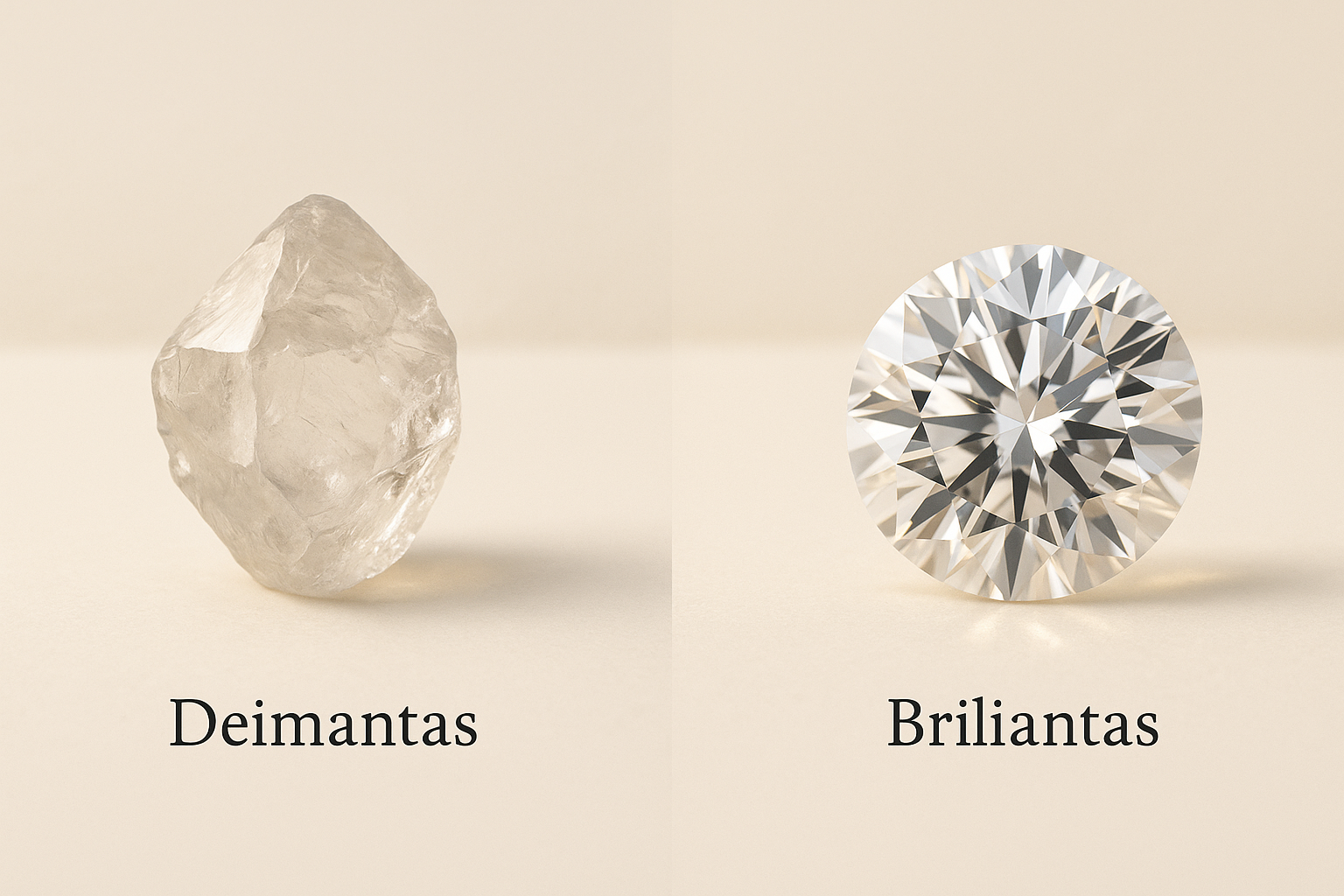
Brilliant – this is a diamond processed with a round cut with 57–58 facets, which highlights the stone’s brilliance and beauty. Thus, every diamond can become a brilliant if it is given the proper shape and cut.
Various diamond shapes also exist – such as oval, square, or heart-shaped cuts, which influence the appearance and value of the diamond.
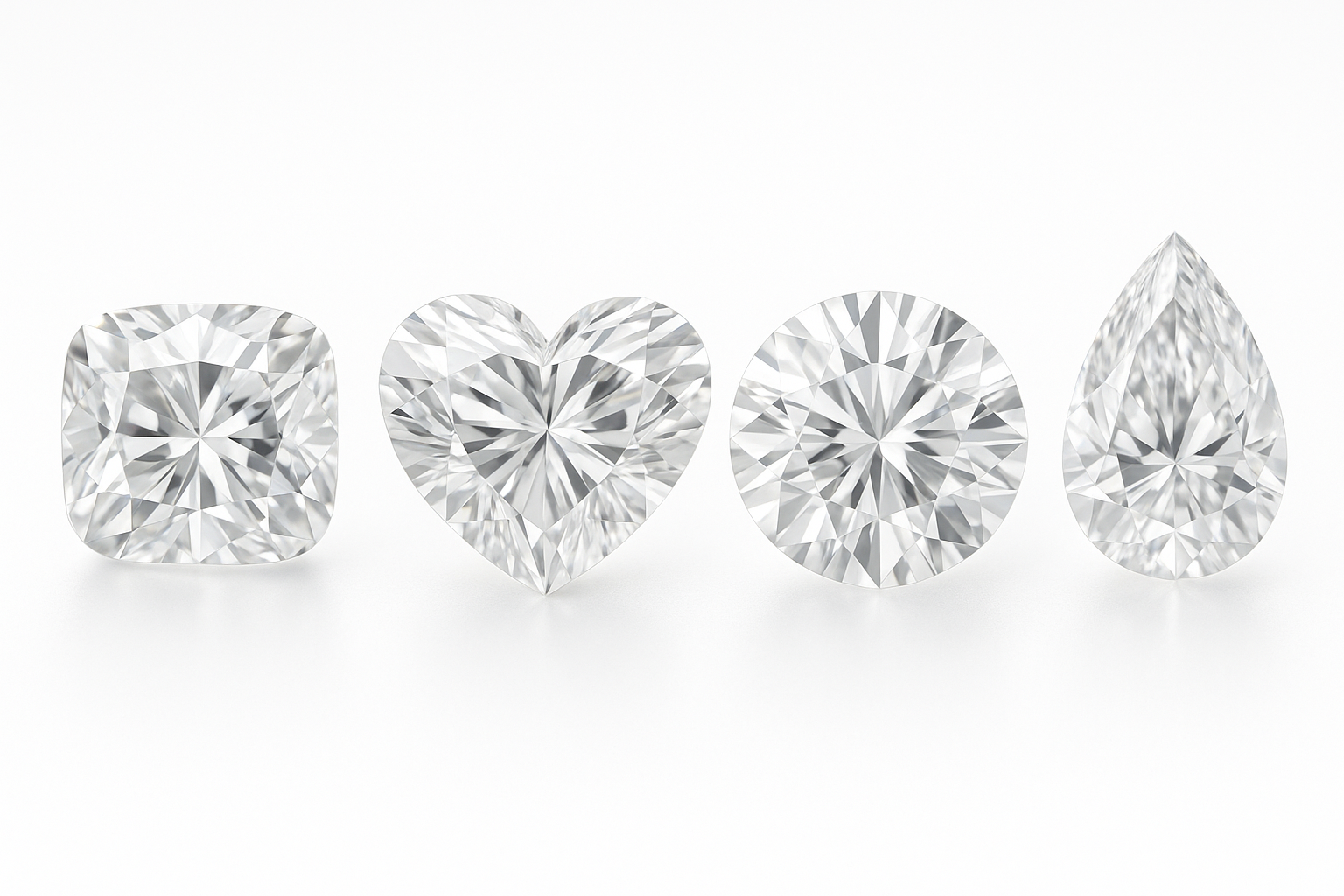
Natural diamonds
How natural diamonds are formed
Natural diamonds form deep within the Earth over millions, and sometimes even billions, of years. Extremely high pressure and temperature cause a simple carbon atom structure to turn into one of the hardest minerals on Earth. Due to this unique process, a natural diamond is not just a gemstone but a true miracle of nature.
Where natural diamonds are found
These stones are found in very limited deposits – mainly in Africa, Russia, Canada, and Australia. Since their resources are limited and decrease over time, natural diamonds are becoming increasingly valued.
What makes natural diamonds special
Furthermore, a natural diamond is unique – each has its own internal structure, inclusions, or color nuances that become like a “fingerprint” of the stone. This means that no two identical natural diamonds exist.
Natural diamonds not only symbolize luxury and eternal love but are also often considered an investment, as high-quality stones with international certificates maintain or even increase their value.
Lab-grown diamonds

How lab-grown diamonds are grown
Lab-grown diamonds (Lab Grown Diamonds) are grown over several weeks by replicating the natural process. They have the same chemical composition, crystal structure, color, and clarity as natural diamonds; only their origin is not deep within the Earth but in special laboratories.
There are two main growing technologies:
- HPHT (High Pressure High Temperature) – natural conditions (high temperature and pressure) in which a diamond forms are replicated.
- CVD (Chemical Vapor Deposition) – a diamond is “grown” from a gas plasma, layer by layer, until a crystal is formed.
Certification of lab-grown diamonds
Lab-grown diamonds are also certified in IGI or HRD laboratories, so their quality is determined according to the same criteria as natural ones. Visually, it is impossible to distinguish them from natural ones with the naked eye – this can only be done by specialized equipment.
Advantages of lab-grown diamonds
These diamonds are considered more environmentally friendly because their extraction does not require mass mining, which impacts nature. Eco-friendliness and ethical choice are among the main reasons why lab-grown diamonds are rapidly gaining popularity among young buyers.
“Artificial diamonds” – a common mistake
Often people call laboratory-grown diamonds “artificial diamonds,” but this is not an accurate description. A lab-grown diamond is a real diamond – having the identical chemical composition, crystal structure, optical and physical properties as a natural diamond. The only difference is its origin is a laboratory, not nature.
Artificial diamond (imitation) – these are synthetic or imitation stones that only look similar to a diamond but do not have its properties. For example:
- Moissanite – a very sparkly synthetic gemstone, visually similar to a diamond but with different chemical properties.
- Cubic Zirconia (CZ) – a popular imitation, a synthetic crystal visually resembling a diamond but much softer and cheaper.
- Other synthetic crystals or glass imitations.
Therefore, using the term “artificial diamond” for a lab-grown diamond is a mistake because it misleads the buyer. In international practice, they are called Lab Grown Diamonds, Laboratory-Created Diamonds, or Man-Made Diamonds – all these terms mean they are real diamonds, just obtained in a different way.
✅ Important for the buyer to know: if you see the phrase “artificial diamond” in documents or a seller’s description, always clarify whether it refers to a lab-grown real diamond or a synthetic imitation. This will help avoid a false impression and ensure you get what you are looking for.
Certified diamonds
Certified diamonds are evaluated in independent laboratories such as GIA (Gemological Institute of America), HRD (Hoge Raad voor Diamant – Antwerp Diamond Council), or IGI (International Gemological Institute). Quality is determined by four criteria – color, clarity, weight (carats), and cut. A certificate ensures that the stone is real and has a clear market value. The GIA certificate is considered the most reliable international standard.
Interestingly, the same diamond may be evaluated differently in different laboratories – for example, a G color in one place might become an H color, and VS1 might become VS2. This is normal, as each laboratory applies its own standards.
👉 Tip: rely on the GIA certificate as the most reliable source, but don’t forget to evaluate the diamond in person – its sparkle, proportions, and overall impression.
Lithuanian Assay Office – a guarantee of reliability
In Lithuania, international certificates (GIA, HRD, IGI) are not mandatory, but every diamond must be checked at the Lithuanian Assay Office, which evaluates according to CIBJO (World Jewellery Confederation) standards. Since they often check stones that are already set, the evaluation is stricter and may differ from international laboratories, allowing up to a 20% margin of error. Such differences are normal, as this institution primarily protects the buyer’s interests.
Therefore, a diamond purchased in Lithuania has a double guarantee – an international certificate and confirmation from the Assay Office, providing greater security and transparency.
Diamond shape
Most popular diamond shapes
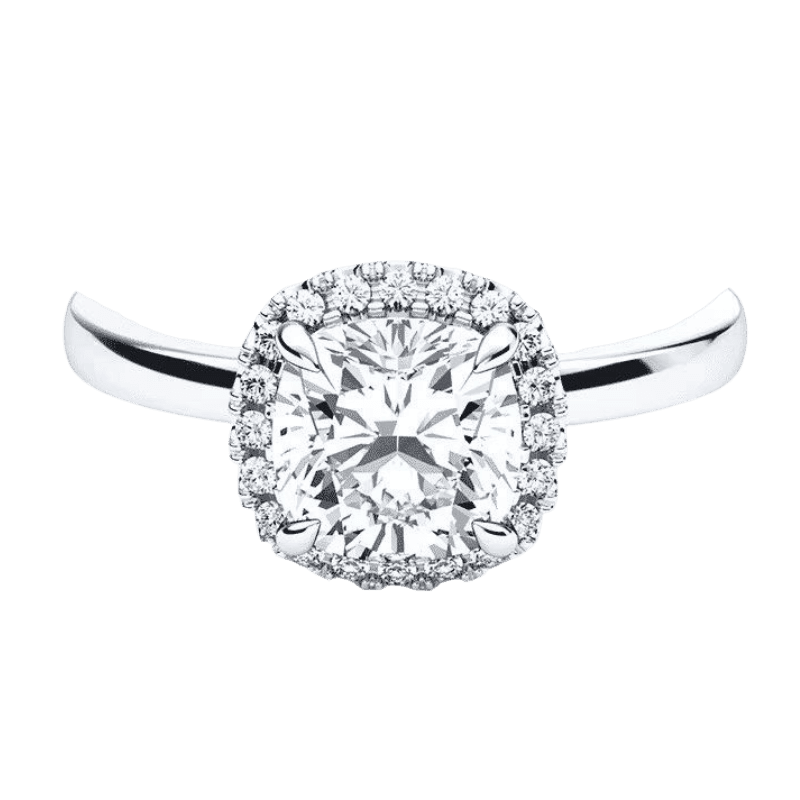
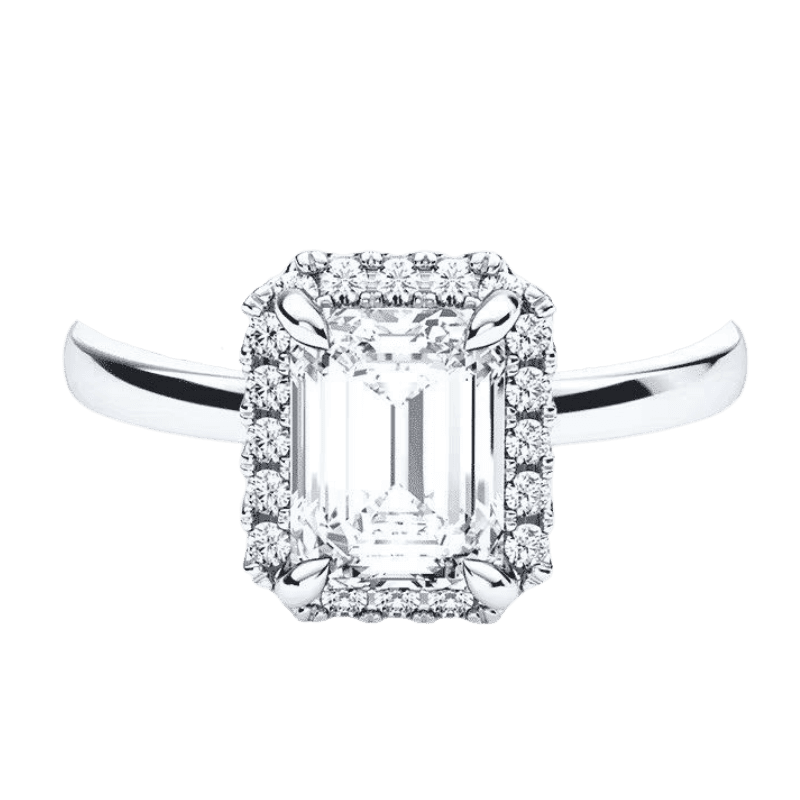
A diamond’s shape can be round, oval, princess (square), emerald, or heart. You can also choose the diamond shape you like best based on your personal preferences.
The popularity of these shapes depends on fashion trends, and they are evaluated based on quality criteria such as symmetry, proportions, and light reflection.
A properly chosen diamond shape is extremely important for rings, especially engagement or wedding rings.
Diamond color
Diamond color scale
Color determines the stone’s value – from D (whitest) to Z (with a yellowish tint).
It is also important to mention that all color nuances, such as hue, tone, and saturation, determine the stone’s beauty and value.
Diamond clarity
Diamond clarity classification
Clarity (the clarity indicator) describes how many inclusions a stone has. The fewer there are, the more valuable the diamond.
Diamond weight – carats
Carat – the unit of diamond weight
The weight of brilliants must be coordinated with the budget, as each additional carat (1 carat = 0.2 grams) significantly increases the price. A carat is the unit of weight used to measure diamonds.
Diamond prices
Diamond prices can differ tenfold depending on whether they are natural or lab-grown. Size (carat) is one of the main factors determining diamond price differences. The price of each diamond is determined according to four criteria – the 4Cs: color, clarity, cut, and carats. The 4Cs is the international diamond quality evaluation standard.
The price of a 1ct brilliant is often higher than the price of a 1 carat diamond because a brilliant is a specially processed diamond whose cut shape highlights the stone’s beauty, clarity, and color.
Investing in diamonds should be done according to your needs and budget, but it is most worthwhile to choose brilliants with a GIA or other recognized certificate, as this ensures their authenticity and quality.
The comparison table will help you quickly understand the main differences between a natural, lab-grown, and artificial (imitation) diamond – this is especially relevant when choosing a diamond for jewelry or investment.
Comparison: Natural Diamond vs Lab-Grown Diamond vs Artificial Stone
| Type | Origin and Composition | Is it a real diamond? | Certificate (GIA, HRD, IGI) | Price of 1 carat diamond* | Price of 1 carat brilliant* | Notes |
|---|---|---|---|---|---|---|
| Natural Diamond | Forms deep in the Earth’s depths over millions of years | Yes ✅ | Yes, international certificate mandatory | from €1200 and more | from €1700 and more | Rare, unique, considered an investment |
| Lab-Grown Diamond | Grown in a laboratory by replicating natural processes | Yes ✅ | Yes, certified according to the same standards | from €300–800 | from €300–1500 | More eco-friendly, budget-friendly |
| Artificial Diamond (imitation: moissanite, cubic zirconia, etc.) | Synthetic or glass crystals visually resembling a diamond | No ❌ | Certificates not applicable | from €30–100 | from €40–100 | Visually similar, but lacks diamond properties |
| Notes: |
- Moissanite – a synthetic gemstone, very sparkly, but with a different chemical composition than diamond.
- Cubic Zirconia (CZ) – a synthetic crystal visually resembling a diamond, but much softer and cheaper.
- Prices are indicative and may change depending on quality, certificate, and market situation.
A diamond is a perfect gift

A diamond is a timeless gift that you want to give a person for a special occasion.
Diamond care and storage
To ensure a diamond remains sparkly and valuable for many years, it is necessary to properly care for and store it.
Key care steps:
- Keep diamonds separate from other jewelry to prevent surface scratches.
- Regularly clean diamonds with special diamond cleaning products or a mild soap solution.
- If a diamond is chipped, scratched, or has other defects, contact a professional jeweler for restoration.
- Each diamond is unique, so the restoration process must be individually adapted.
FAQ: Frequently Asked Questions
What is the difference between a diamond and a brilliant?
A diamond is the mineral; a brilliant is a diamond with a round cut (57–58 facets) that highlights its sparkle.
Is a lab-grown diamond real?
Yes, lab-grown diamonds are identical to natural ones in their properties – chemical composition, crystal structure, and optical properties are the same.
How much does a 1 carat diamond cost?
A natural 1 carat diamond costs from €1500, while a lab-grown one starts from €400 (depending on quality and certificate).
Is a diamond a good investment?
Natural certified diamonds are considered a long-term investment, as their value often remains stable or grows over time.
What is moissanite?
Moissanite is a synthetic gemstone visually similar to a diamond but with a different chemical composition and higher brilliance.
What does diamond clarity mean?
Clarity indicates the amount of inclusions inside the stone – the fewer there are, the more valuable the diamond.
Why is a GIA certificate important?
The GIA certificate confirms the diamond’s quality and parameters according to international standards, thus ensuring the stone’s authenticity.
Are all diamonds checked in Lithuania?
Yes, all diamonds are checked by the Lithuanian Assay Office, which evaluates them according to CIBJO standards.
Which shape should I choose for a ring?
The round shape is most commonly chosen, but princess, oval, or emerald shapes are also popular.
What is the difference between the price of a diamond and a brilliant?
The difference is not significant – the price depends on the cut, weight, color, and clarity.
How to choose the right diamond for you?
Our experts are always ready to help you – we will take your needs into account and recommend a diamond based on your desired properties, budget, and certification requirements.