The Diamond – A Symbol of Perfection
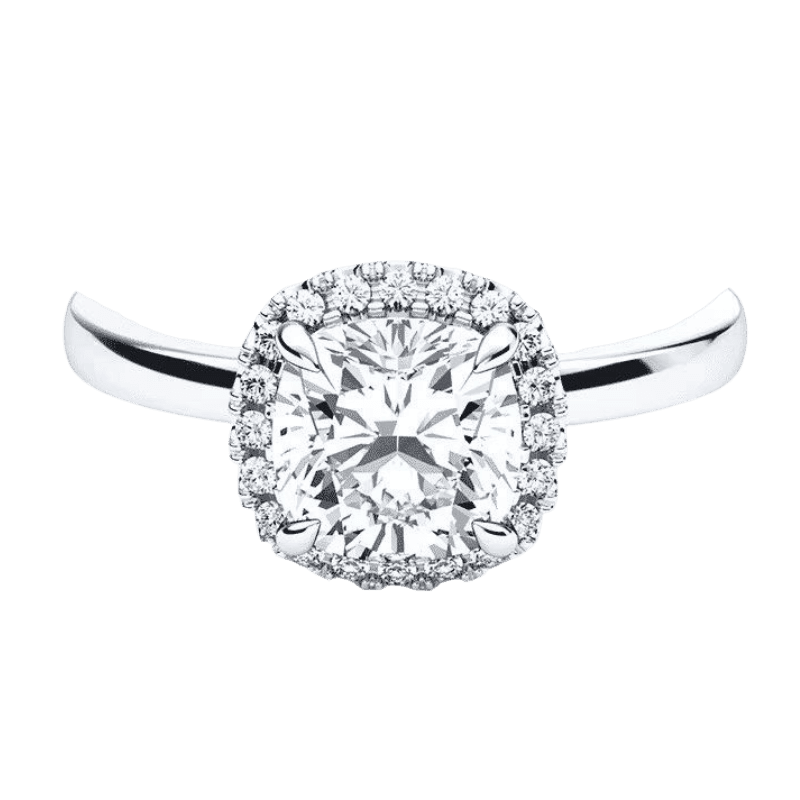
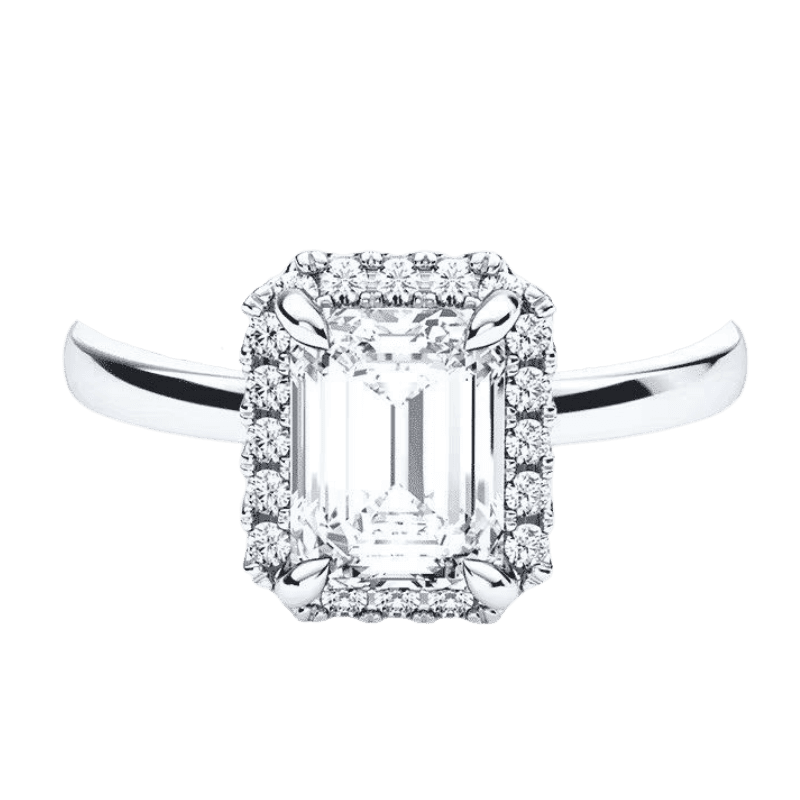
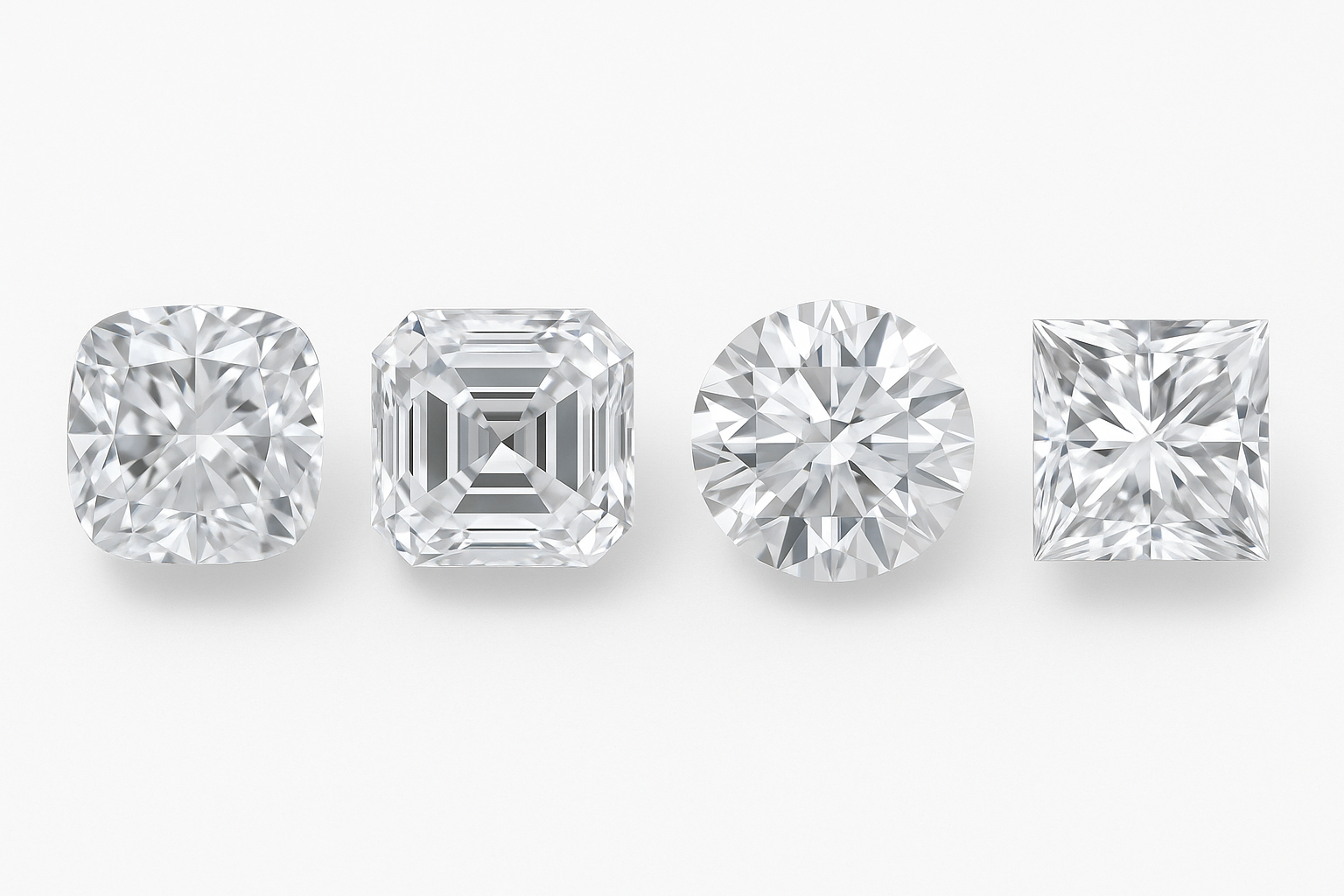
We speak of a diamond not just as a gemstone: it is a cultural sign, a promise of feeling, and a metaphor for longevity. Its exceptional status was determined not only by its rarity or origin story but also by its unique physical properties – hardness, resistance, and light dispersion. Each stone is different, so true beauty is revealed when we understand what makes a “good” diamond and why one shines brighter while another is more subtle. For example, these are the stones customers most often look for, valuing their uniqueness and longevity.
What Determines Diamond Quality
Internationally, diamond quality is assessed using the 4C system – Carat (weight), Color (color), Clarity (clarity), and Cut (cut). These are not separate but interconnected parameters: a higher carat count won’t impress if the cut is poor, and a very clean stone can be diminished by a noticeable yellowish tint. The final value is formed by the whole, so when choosing, it is important to look at the entire “profile” of the diamond, not just a single number. Brilliants are evaluated according to the same criteria as diamonds, which is why they have high investment potential.
Diamonds Among Gemstones
According to the Mohs scale, the diamond reaches the highest degree of hardness – ten – making it practically scratch-proof and perfect for everyday jewelry. This physical strength is combined with extremely strong light refraction, so a well-cut stone sparkles as if emitting internal light. It is no coincidence that diamonds became the classic choice for engagement rings – they are resistant to time in both a literal and figurative sense.
Diamond or Brilliant – What’s the Difference
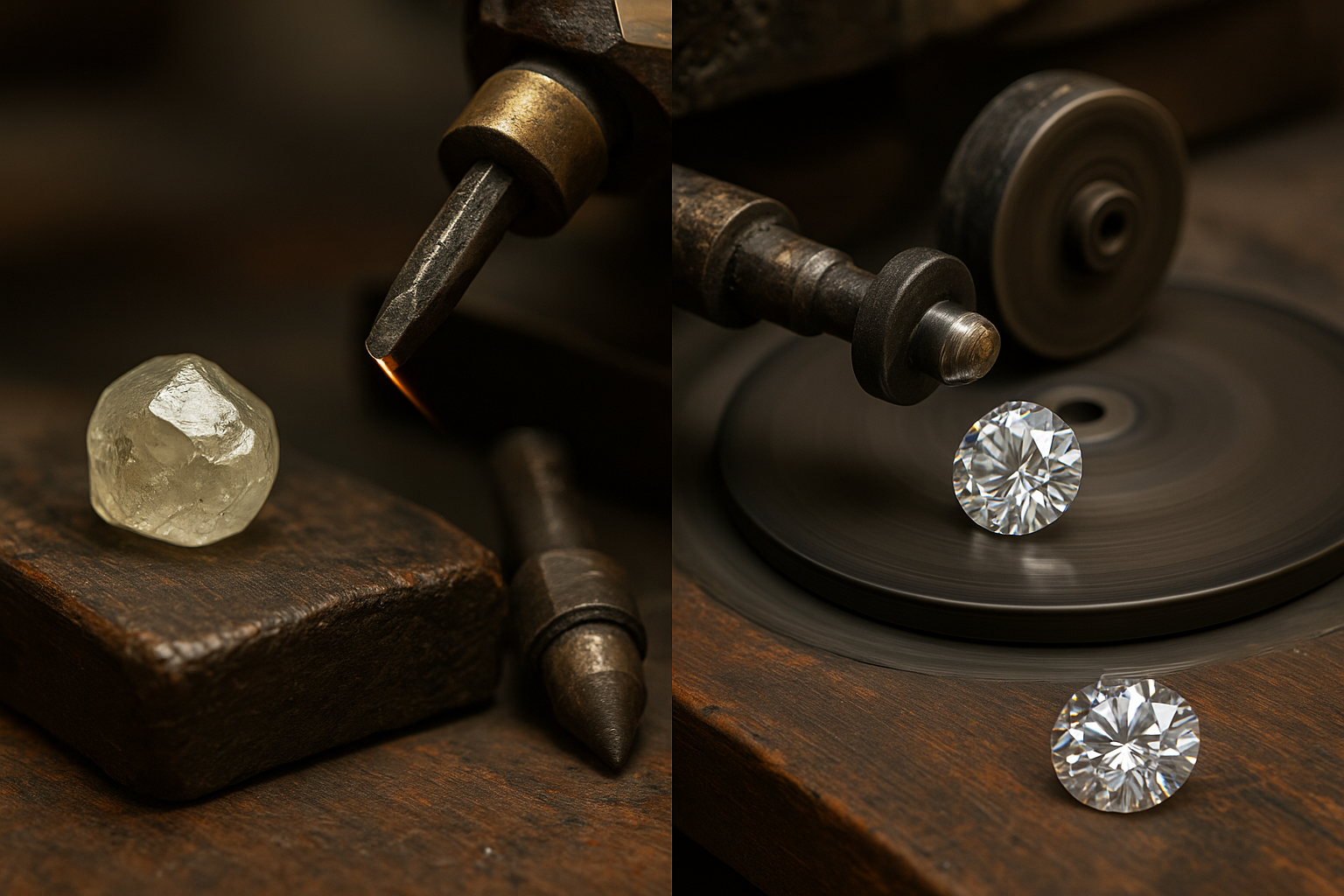
The common question “brilliant or diamond?” essentially refers to the same stone at different stages. A diamond is the raw material, a crystal created by nature, while a brilliant is a round-cut diamond with 57–58 facets, designed to reflect light to the maximum. In other words, every brilliant is a diamond, but not every diamond is a brilliant. It is important to emphasize that the term brilliant refers specifically to a round-shaped, specially cut diamond, distinguished by its sparkle and luxury.
The difference between a diamond and a brilliantThe difference is determined by the cut: a precise model of proportions and angles is applied to a brilliant, allowing light to “dance” inside the stone. If the proportions do not meet standards, even a diamond with high color and clarity can look dull. Therefore, when buying, always look not only at the color or clarity but also at the Cut grade. It is also worth knowing that a diamond is an unprocessed stone, whereas a brilliant is an already processed and faceted diamond.
Carat – A Measure of Weight (Not Size)
One carat equals 0.2 grams, so five carats are just one gram. However, carats determine the price exponentially: the larger the stone, the rarer it is. It is important to understand that visual size is also determined by the proportions of the cut: a well-cut 1.00 ct brilliant may look larger than a poorly proportioned 1.20 ct stone.
Carat in Grams – How to Read the Numbers
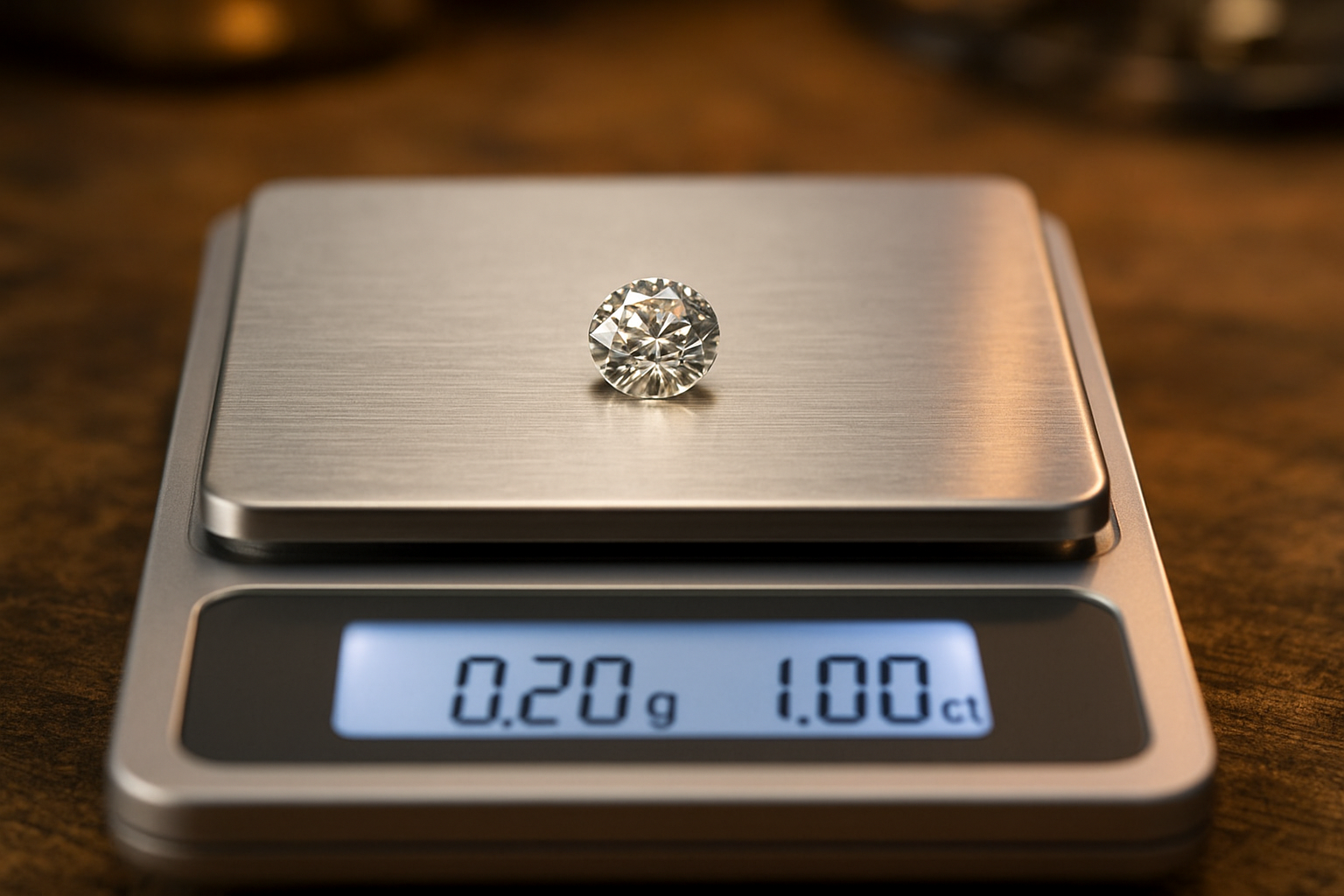
The number 1.00 ct indicates weight, not diameter. A round brilliant with an excellent cut typically has a diameter of about 6.4–6.6 mm, but even a small cut error can visually “narrow” the stone. Therefore, the “1 carat diamond price” is always linked to the cut and proportions, not just weight in grams. The value of brilliants depends on their cut and light-reflecting properties.
1 Carat Diamond Price
The price is determined not only by weight but also by color, clarity, and cut. The price of a natural 1 ct stone can range from approximately 2,000 to 15,000 euros, while laboratory diamonds can start from several hundred. For example, some jewelry with smaller diamonds is sold for €100.00. Even with the same carat weight, the value of different 4C combinations can differ several times. Laboratory diamonds are no worse than natural ones, so their price can be more attractive.
Brilliant Price – How Much is Light Worth
Pricing ranges from a few hundred to tens of thousands of euros, depending on the 4Cs and additional features. The price of a 1 ct brilliant is often used as a benchmark, but the true beauty lies in the combination of numbers. Sometimes a smart compromise between color and clarity, but with an excellent cut, creates the ideal result.
Why Diamond Prices Differ So Much
The market price responds sensitively to demand, supply, and the quality segment. Certified stones with high color and clarity grades and an excellent cut always cost more. Meanwhile, an advanced cut can sometimes visually compensate for a lower color or clarity rating, yielding a great result with a more reasonable budget.
Color – The Purity of Light
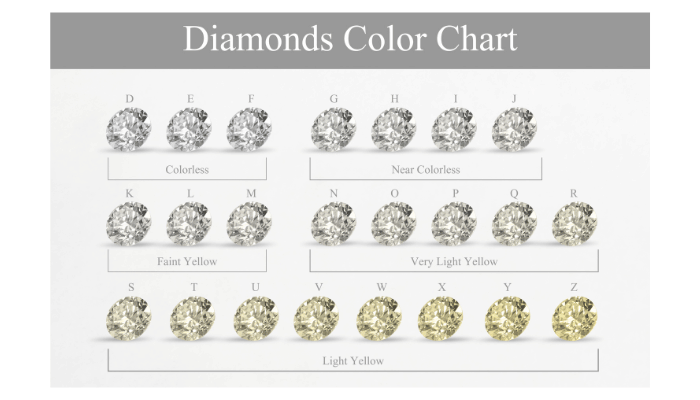
Color is graded from D (completely colorless) to Z (noticeably yellowish or brownish). The less tint, the rarer and more expensive the stone is considered, unless we are talking about “fancy” colors, where dramatic tones are an advantage. For everyday wear, G–H grade stones are often chosen because they look very white but are priced more rationally.
Tints – Subtle but Significant
Within the same color grade, stones can still “lean” slightly towards a warmer or cooler tone. Such nuances are difficult to catch with the naked eye, but a professional’s eye will recognize the difference, and lighter metals (white gold, platinum) can highlight it further. Therefore, it is always worth seeing the stone in person and under different lighting.
Fluorescence – Invisible Daily, but Worth Knowing
Under UV light, some diamonds glow bluish, and although you won’t notice this in daily life, strong fluorescence can optically “lighten” a lower-grade stone or, conversely, create a haze. This is a nuance worth discussing with a consultant and seeing in person.
Clarity – About Inclusions and Their Visibility
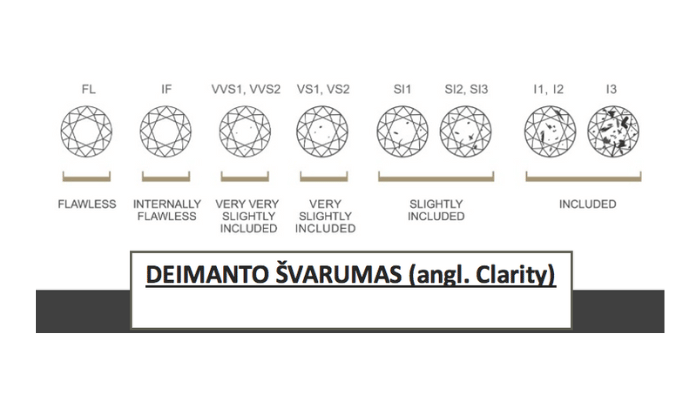
Clarity is marked from FL/IF to I3, but the most important thing is whether the inclusions are visible to the naked eye and where they are located. VS1–VS2 level stones usually look clean even when zoomed in, while in the SI class, details can already be seen, especially if the cracks are near the table. Not only the grade is important, but also the type and position of the inclusion – this directly affects the aesthetics.
Transparency and the Path of Light
Even small internal defects can change light dispersion, so clarity and cut are interconnected. Sometimes a diamond looks “milky” (the so-called milky effect) and loses its spark, even though its clarity is formally high. That’s why evaluating a stone requires not just a table, but an eye.
Cut – The Heart of the Diamond
Cut has the greatest impact on the visual effect: an excellent cut creates a “mirror” through which light returns, while a poor one “lets it out” through the sides. Proportions, polishing, and symmetry – the three indicators upon which brilliance rests. If you want maximum “wow”, always choose at least a Very Good/Excellent cut, otherwise known as 3EX.
Polishing and Symmetry – The Final Touches
A cleanly polished and symmetrical stone looks harmonious, does not tire the eye, and does not “get stuck” on small irregularities. These seemingly technical features in reality determine the main thing – whether the brilliant sparkles as it should.
Certificates – Your Peace of Mind
A certificate from GIA, HRD, IGI, or another recognized laboratory is the objective equivalent of a stone’s passport. It records all 4Cs, additional notes, and often – a number laser-engraved on the girdle. Without a certificate, “diamond price” is just a guess; with a certificate – it is a clearly stated value.
Lithuanian Assay Office – Local Reliability
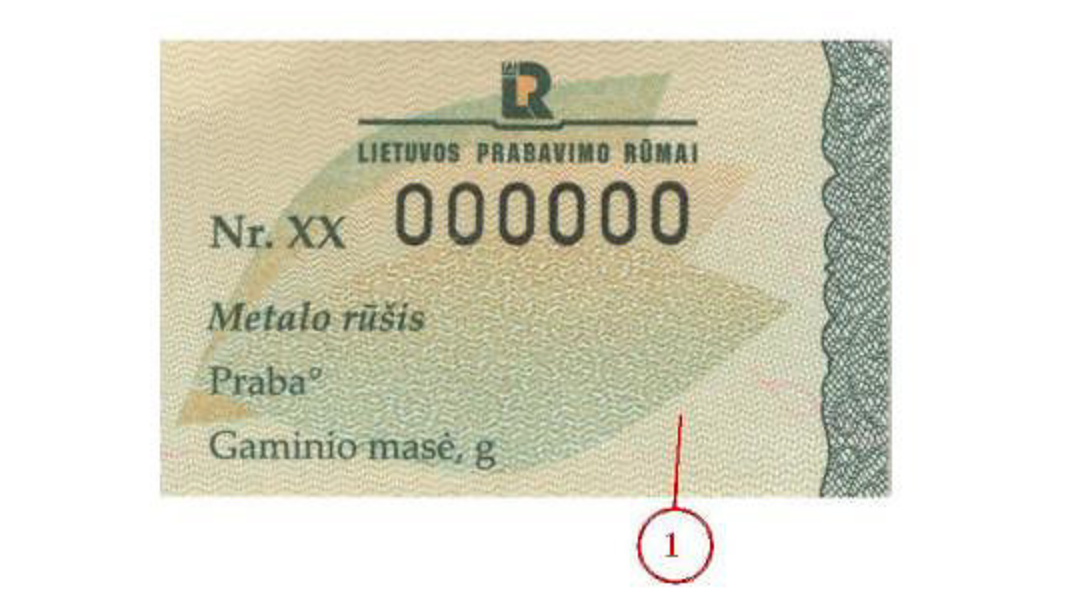
Diamonds offered by Fashion Gold are checked at the Lithuanian Assay Office, so you can be sure of compliance with standards. An international certificate and local confirmation constitute a double security guarantee. For the buyer, this means transparency and peace of mind.
Diamonds as an Investment
High-quality, certified stones maintain or even increase in value in the long term. This is not just jewelry, but a thoughtful way to preserve wealth, especially when we talk about a good combination of color and clarity with an excellent cut. Most importantly – choose responsibly and with documentation.
Diamond Tasting – Get to Know Them Live
Education about diamonds can be ordered at the salon, where you can compare them side-by-side, see the tints, brilliance, and inclusions in different lighting. Such a comparison often dispels myths and helps to see why two “similar” diamonds cost differently. A live impression is the best advisor.
Choice and Delivery
FashionGold.lt Our range includes only certified diamonds and brilliants, and the variety of shapes and sizes allows you to adapt the stone to your style and budget. All diamonds and brilliants are sold with certificates, ensuring their authenticity and quality. We also offer a wide selection of items so that everyone can find the right option for themselves. We ensure a smooth process from consultation to picking up the jewelry. Quality and reliability are our daily routine.
A Gift That Lasts
A diamond is a memory immortalized in light. Chosen with love and knowledge, it becomes part of a family history, accompanying you through the most important moments. Such a gift is valuable not only today but also many years later.
How to Choose Correctly
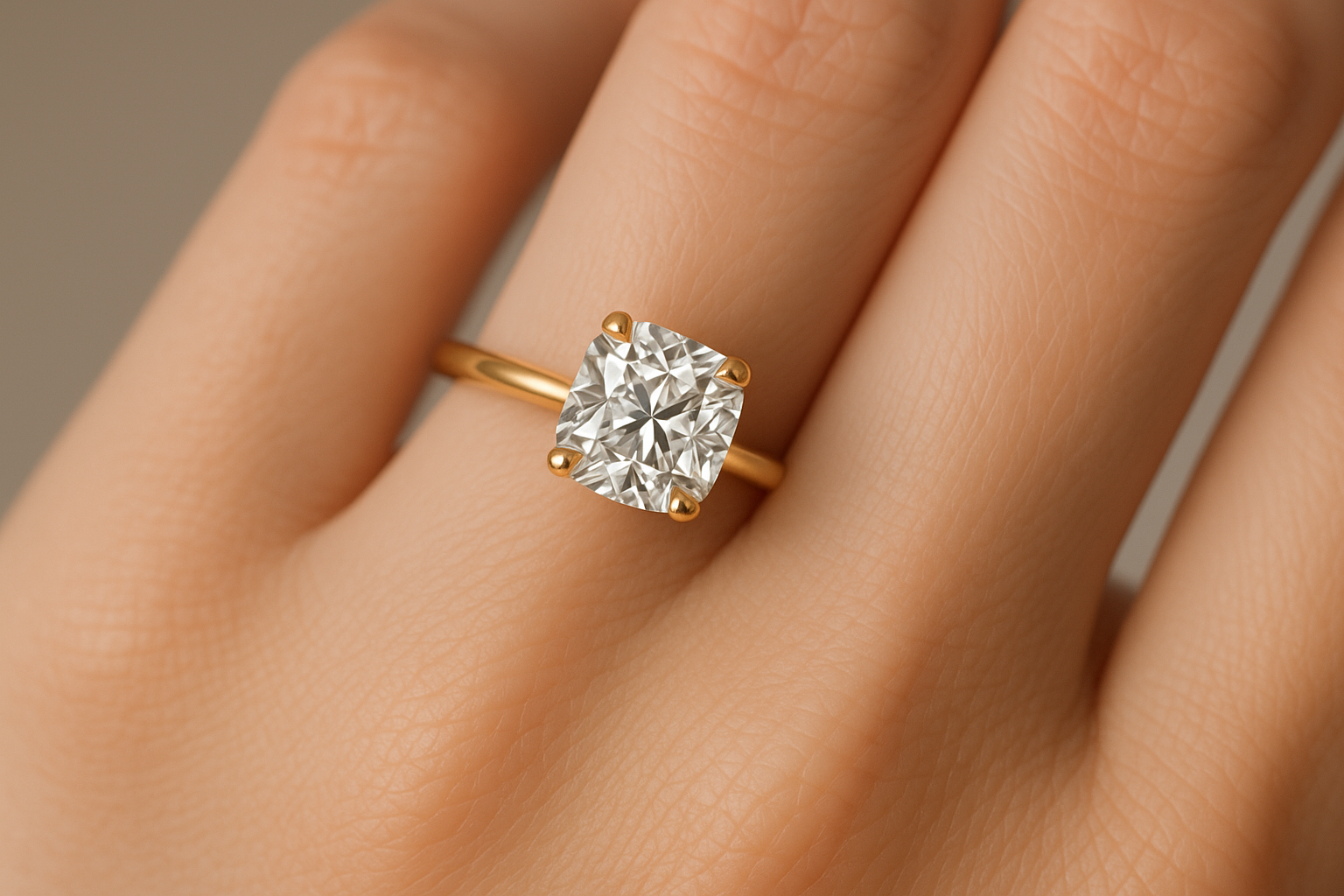
When choosing a diamond, look at the whole: carats, color, clarity, and cut, as well as – polishing, symmetry, and fluorescence. Compare stones live, rely on certificates and specialist advice. With the Fashion Gold team of experts, you will find a stone that meets expectations and delights every day.
About Diamonds
A diamond is one of the most valued gemstones in the world, the price of which depends on many properties – from color, clarity, shape to weight. Each diamond is unique, so it can be not only an exceptional gift but also a long-term investment. Diamonds are considered a symbol of luxury, exclusivity, and eternity, but they are also perfect for everyday or special jewelry. Brilliants, which are specially processed diamonds, are valued for their brilliance, color, clarity, and shape. Whether a diamond is chosen as a gift or as an investment, each stone has its own story and value, which depends on its properties.
Properties of Diamonds
The properties of diamonds are a key factor determining the value of each gemstone. A diamond is evaluated based on criteria such as color, clarity, shape, and weight – it is these properties that determine how valuable it will be on the market. Diamonds intended for investment should be certified, as only certified gemstones ensure their authenticity and reliability. Brilliants, as processed diamonds, also have properties that determine their value – from brilliance to proportions. When choosing a diamond, it is important to pay attention to all these properties, as they not only reflect the beauty of the gemstone but also its long-term value.
Storing Diamonds
Proper storage of diamonds is essential to preserve the value and beauty of the gemstone. Diamonds should be kept separately from other jewelry, as even such a hard gemstone can be damaged if it comes into contact with other stones or metals. Brilliants, as processed diamonds, also require separate storage to remain in perfect condition. It is best to store diamonds in special cases designed for gemstones, which protect against scratches and dust. If the diamond is certified, it is important to keep its certificate as well – this not only proves the authenticity of the gemstone but also increases its value in the future. Properly cared for and stored diamonds remain not only beautiful but also valuable for many years.