Lab-grown diamonds: just a beautiful piece of jewelry or a financial opportunity?
Lab-grown diamonds (also known as laboratory-grown or cultured diamonds) have become particularly popular in Lithuania over the past few years. People choose them for their attractive price, high quality, and aesthetic brilliance. However, a question often arises: is a lab-grown diamond the same as a natural diamond or a brilliant, and how do they differ in terms of processing? Another frequently asked question is: can lab-grown diamonds be considered an investment?
Diamonds are not just jewelry – they symbolize luxury, eternity, and stability, and for some people, they also become an object of investment.
In this article, we will review what determines a diamond’s value, why natural and lab-grown diamonds cost differently, and whether lab diamonds can be seen as a long-term investment.
What determines the value of diamonds?
The value of both natural and lab-grown diamonds depends on the same criteria – the 4Cs system:
- Carat
- Color
- Clarity
- Cut
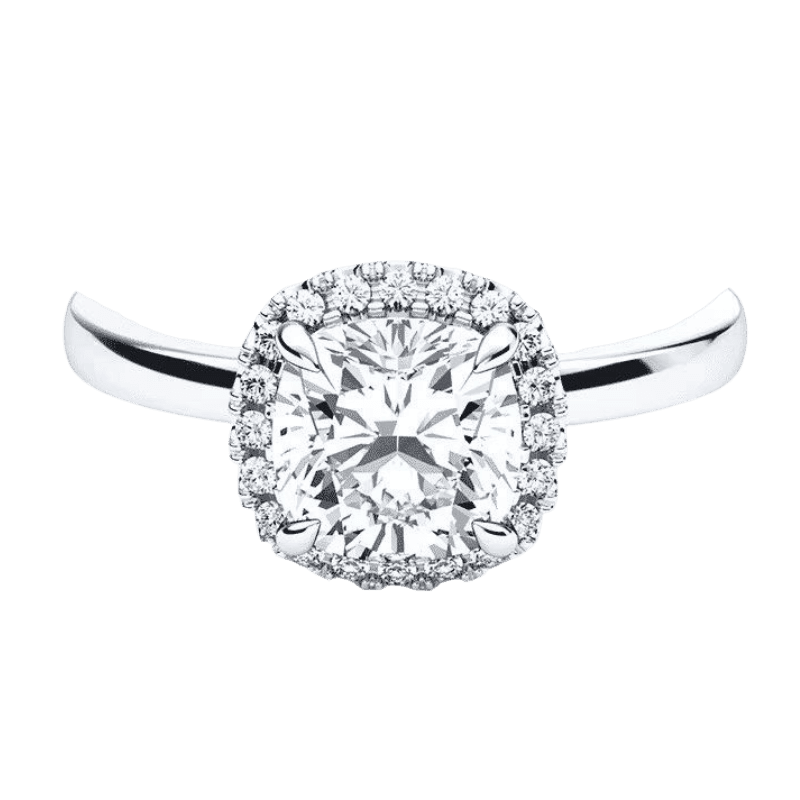
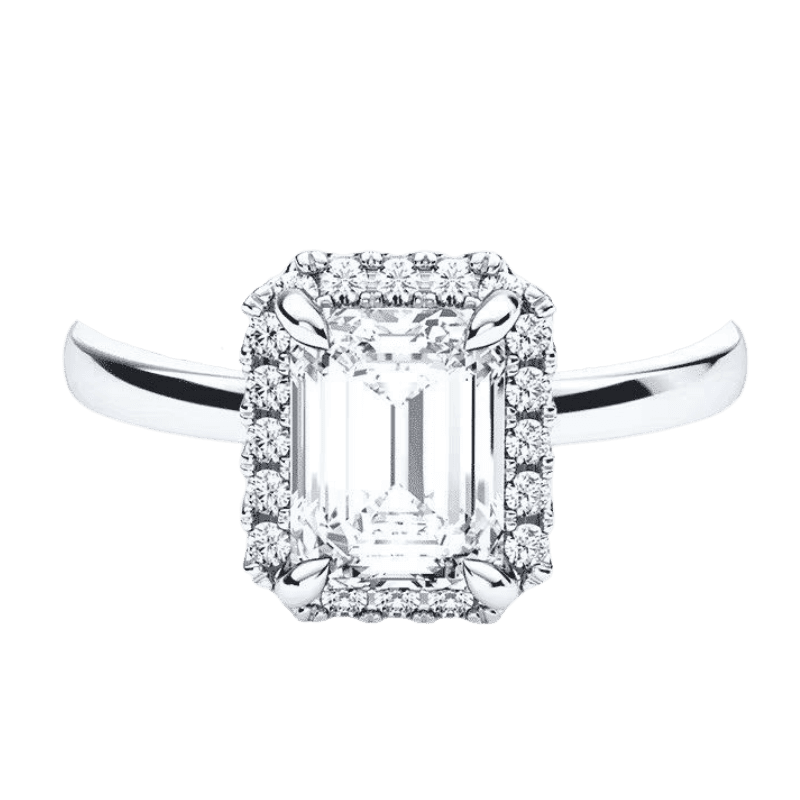
In addition to these criteria, diamond shapes are very important for determining value, as different shapes such as round, oval, or princess determine the play of light and aesthetic appeal. It is also very important to consider the intensity and rarity of the color, as they have a significant impact on price and investment value. Other parameters, such as clarity or cut quality, are also significant when evaluating a diamond.
The better the parameters, the higher the diamond’s value. However, the fundamental difference between natural and lab-grown diamonds lies not in their properties, but in their origin and market dynamics – choices can be made based on different criteria.
Natural diamonds: a classic investment
Natural diamonds formed over billions of years, making them rare and limited. They are more than just jewelry – natural diamonds possess exceptional historical, cultural, and economic value. It is this rarity that allows them to be valued as a long-term investment in diamonds, especially if the stone is of high quality, certified (GIA, IGI, HRD), and belongs to high-demand categories.
In the long term, the value of natural diamonds remains stable or grows, especially when looking at higher-class stones (1 ct+, D–E color, IF-VVS1, 3 EX cut). Diamonds and their various types are valued not only for their investment potential but also for their cultural and artistic significance.
Lab-grown diamonds: high quality, but not an investment
Although lab-grown diamonds are visually and chemically identical to natural ones, their origin and value differ from natural diamonds – lab-grown diamonds form under artificial conditions, while natural ones form in nature, leading to completely different market dynamics.
Why?
- The supply of lab-grown diamonds is unlimited – technology is constantly improving, making production faster and cheaper.
- Every year, more grown diamonds appear on the market, which causes their price to decrease.
- Value in the secondary market only grows in cases where supply is limited. This is not the case with lab-grown diamonds.
For these reasons, lab-grown diamonds are not considered an investment, as their value may decrease over time.
However, this does not mean they are a poor choice – on the contrary.
What makes lab-grown diamonds valuable?
✔ Excellent price-quality ratio
Grown diamonds are up to 40–70% cheaper than natural ones of the same quality – this allows you to choose a larger stone for the same amount of money.
✔ Ethics and ecology
For many buyers, it is important that jewelry is made responsibly. Lab-grown diamonds are a sustainable solution that does not pollute nature and does not involve mining processes.
✔ A modern choice for couples
A couple can choose a larger, more brilliantly shining stone than they would if they were choosing a natural one. This is especially attractive for engagement rings.
The diamond growing process: how are lab-grown diamonds born?
Lab-grown diamonds are one of the most advanced modern achievements, allowing for the creation of diamonds that are equal in properties to natural ones. A diamond is formed using two main technologies: HPHT (High Pressure High Temperature) and CVD (Chemical Vapor Deposition). The HPHT method replicates the natural processes that occur deep within the Earth – carbon material in the laboratory is subjected to extremely high pressure and temperature until a diamond crystal forms. In CVD technology, a diamond is grown layer by layer as carbon atoms settle on a special substrate, gradually forming the diamond.
These processes ensure that every diamond is of high quality, and its properties can be precisely controlled. As a result, diamonds can be tailored to individual needs, and their value depends on the chosen growing method and the achieved quality. Lab-grown diamonds can be not only a great choice for jewelry but also meet the highest standards required by the diamond market. It is important to mention that the diamond growing process allows for the creation of stones that are environmentally friendly and can be valued for their innovation and sustainability.
Diamond certificate: what documents confirm the value?
Every diamond must be evaluated and confirmed by an independent institution so that its value is clear and reliable. A diamond certificate is an official document that describes the diamond’s characteristics in detail – carat, color, clarity, cut, and other important parameters. Such certificates are issued by internationally recognized laboratories, such as the Gemological Institute of America (GIA) or the International Gemological Institute (IGI). These institutions ensure that the diamond evaluation is objective and meets the highest standards.
The unique diamond number indicated in the certificate allows for the identification of each diamond and ensures its authenticity. This is especially important if you plan to invest in diamonds or pass them down from generation to generation, as the certificate is the primary document confirming the diamond’s value and quality. Furthermore, a diamond certificate is essential if you want to sell or exchange a diamond, as it proves the diamond is real and matches the specified parameters. Additionally, a certificate provides peace of mind that your chosen diamond has been evaluated by professionals and can be recognized worldwide.
Do lab-grown diamonds have investment value?
In short: no.
However, they should be viewed not as a financial investment, but as an investment in emotional value, as lab-grown diamonds possess the same properties as natural ones and are an excellent choice for those seeking quality and sustainability.
Here is why:
- they are beautiful, high-quality, and shine just like natural ones;
- they are perfect for jewelry that will be valued, worn, and passed down;
- they allow you to have a larger and brighter stone without overpaying.
If the goal is purely a financial investment, you should choose a natural certified diamond.
If the goal is beautiful jewelry at a better price, lab-grown diamonds are one of the best choices.
Investing in diamonds: how to choose correctly?
If you are thinking about a long-term investment, choose:
- Stones of 0.50–1.50 ct and larger
- Colors D–E
- Clarity IF–VVS1
- EX/EX/EX cut
- GIA or IGI certificate
- Well-known cuts (round brilliant, oval, radiant). Brilliants are meticulously processed diamonds that, due to their exceptional brilliance and classic beauty, are among the most popular and valuable shapes for investment.
These criteria ensure that the diamond will remain in demand over time.

Who should choose lab-grown diamonds?
Lab-grown diamonds are an excellent choice if:
- you want a larger stone at an affordable price;
- you are looking for a modern, ethical solution;
- you value sustainability and a contemporary approach;
- aesthetics are more important than investment value.
They are especially popular when choosing:
- engagement rings,
- diamond bands,
- diamond pendants,
- diamond earrings.
Summary: lab-grown diamonds – an investment in beauty, natural – in value
- Natural diamonds remain a very valuable investment due to their rarity and limited supply.
- Lab-grown diamonds are unrivaled in terms of the price, quality, and ethics ratio, and they can come in various colors, providing additional freedom of choice, but they do not hold long-term financial value.
Therefore, when choosing, it is worth clearly answering the question: Am I looking for an investment? or Am I looking for a beautiful, bright diamond at a good price?
Both options are correct – just for different purposes.