A diamond is one of the most valuable and rarest gemstones in the world. A diamond is considered the most expensive mineral in the world. It is a naturally formed mineral—this is exactly what a diamond extracted from the depths of the Earth is, characterized by unique optical and physical properties. Its uniqueness and value depend on many factors, such as clarity, color, cut, and weight. Historically, various methods have been used to determine if a diamond is real—appraisers analyzed its hardness, light refraction, certificates, and other criteria to ensure authenticity. The crystalline structure of a diamond is an extremely important property that helps to accurately identify this mineral.
What is a brilliant?
Brilliants are processed diamonds. And a diamond is one of the wonders of nature, belonging to the class of native elements. Its chemical composition is a crystalline modification of carbon, formed deep within the Earth’s mantle under conditions of extremely high temperature and pressure. A diamond is an allotrope of carbon. It is a mineral that has remained unchanged for billions of years, making every diamond a true witness of time.
A brilliant is a diamond that has been specially processed and cut to become a brilliant—due to this cut, it looks exceptionally sparkling and highlights maximum light reflection.
The diamond – a symbol of nature’s perfection
The diamond is the hardest mineral found in nature, achieving the highest rating on the Mohs scale—10 units. Its uniqueness lies in the fact that although the stone is incredibly hard, it can also be brittle, so its cutting requires great mastery. It is important to emphasize that certain characteristics of a diamond, such as shape, cut, and polishing, determine its sparkle and value. Every diamond is a unique and unrepeatable creation formed by nature over billions of years.
Since ancient times, diamonds have been considered symbols of love, loyalty, and power. Ancient rulers wore them as a sign of eternal strength, and today this gemstone has become inseparable from the engagement ring and the promise of eternal love.
Diamond properties
A diamond is not only one of the most beautiful but also the hardest natural stone in the world. Every diamond is a crystal of pure carbon, formed over millions of years deep beneath the earth’s crust, where immense pressure and high temperatures act. Due to these unique conditions, diamonds are not only rare but also exceptionally strong—their hardness is unparalleled, making them perfect for jewelry. Diamonds are valued according to the 4C rule: carat weight, color, clarity, and cut. The less color tint a diamond has, the higher its value, however, diamonds can come in various colors—from completely colorless to deep yellow or even pink. Every diamond is a natural miracle, whose shape and color determine not only its aesthetics but also its value. Diamonds can come in various shapes, and their choice allows everyone to find the most suitable option according to personal taste and style.
The evolution of diamond cutting
The history of diamonds began in ancient India, where the first stones were found in riverbeds. However, it was only in the 14th century that diamond cutting began in Europe. The first brilliants were crudely cut until 1919, when the Belgian mathematician Marcel Tolkowsky created the ideal cut—called the Round Brilliant Cut, allowing the diamond to reflect light to the maximum and create that unique sparkle that still fascinates the whole world today. The brilliant cut is unique and characteristic only to this round diamond shape, which is why it is often associated with exceptional quality and aesthetics.
9 most popular diamond shapes
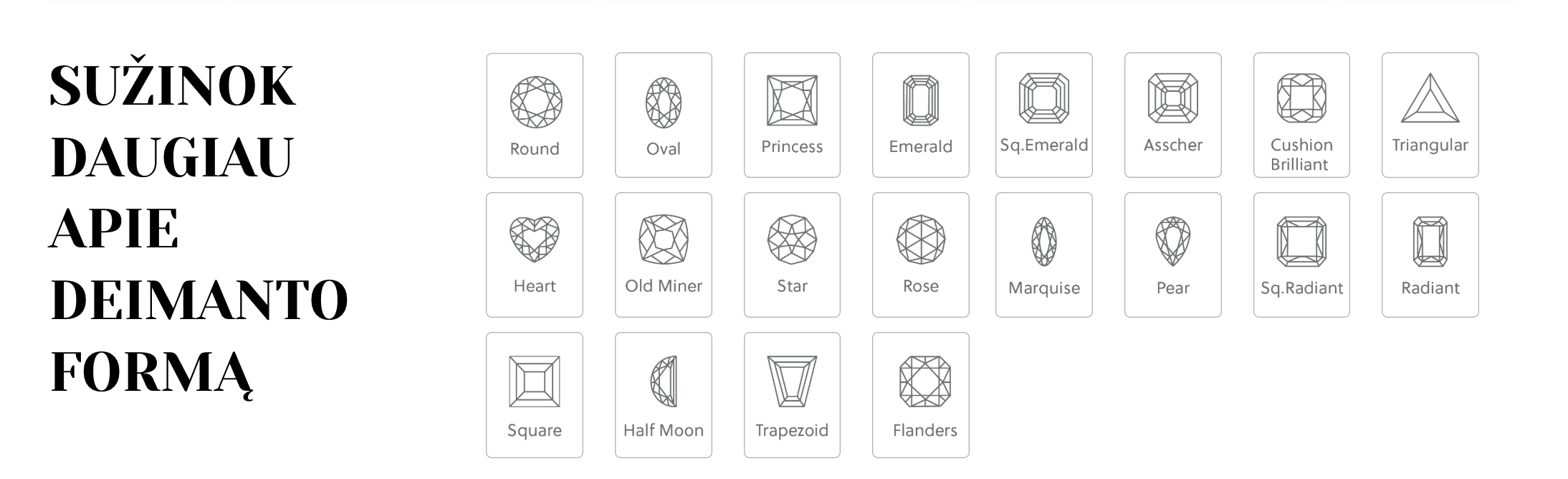
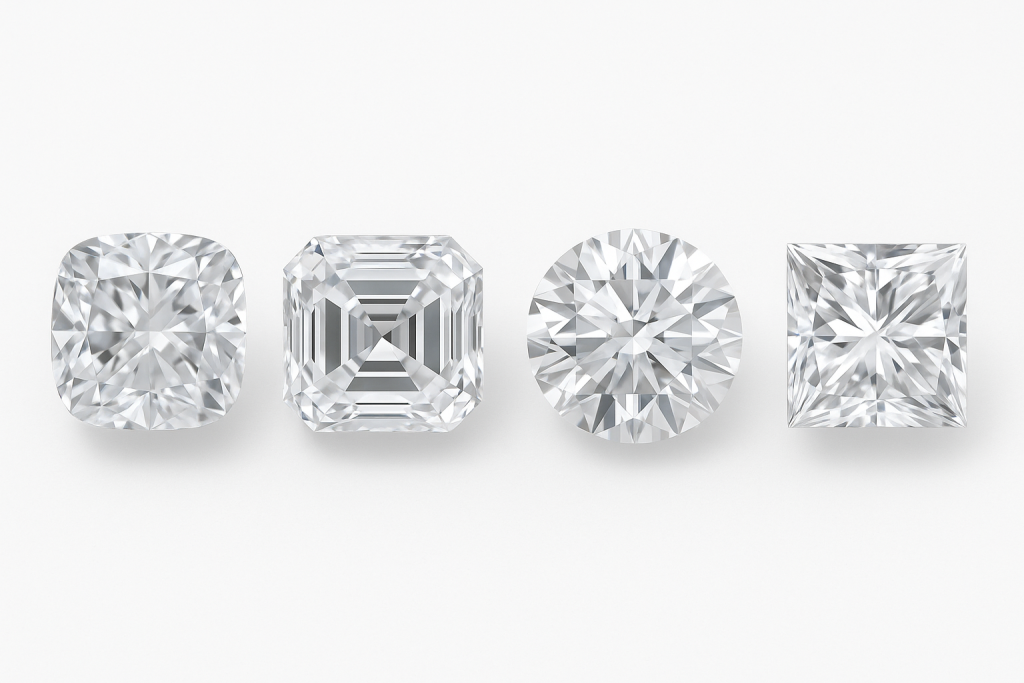
Every diamond can be cut into different shapes, and the choice depends on personal style and symbolism. When choosing a diamond shape, it is important to consider individual needs and style so that you can choose what best meets your expectations.
- Round Brilliant – a classic, distinguished by maximum light reflection. This shape perfectly reveals the diamond’s color.
- Princess Cut – modern and sharp, favored by contemporary women. This shape can also emphasize the diamond’s color.
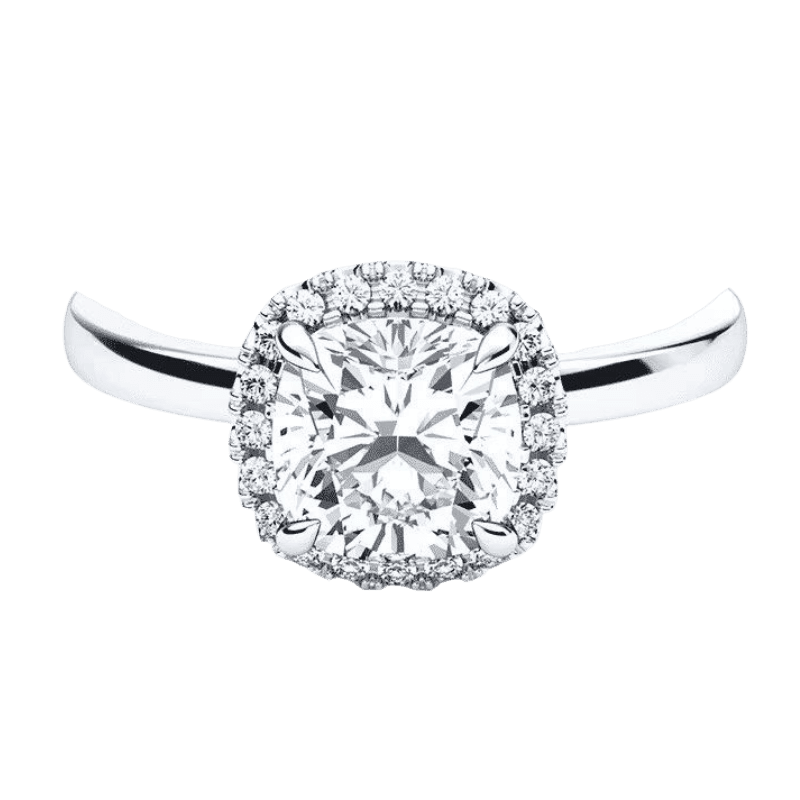
- Cushion Cut – a soft, romantic glow reminiscent of antique rings. The cushion shape highlights the diamond’s color and warmth.
- Marquise Cut – an elegant silhouette that elongates the finger. The marquise shape can enhance the diamond’s color.
- Heart Cut – a symbol of love, a unique and bold choice. The heart shape allows the diamond’s color to stand out.
- Pear Cut – an exceptionally graceful and feminine option. The pear shape often emphasizes the diamond’s color.
- Oval Cut – visually increases the size of the diamond and remains very elegant. The oval shape can highlight the diamond’s color.
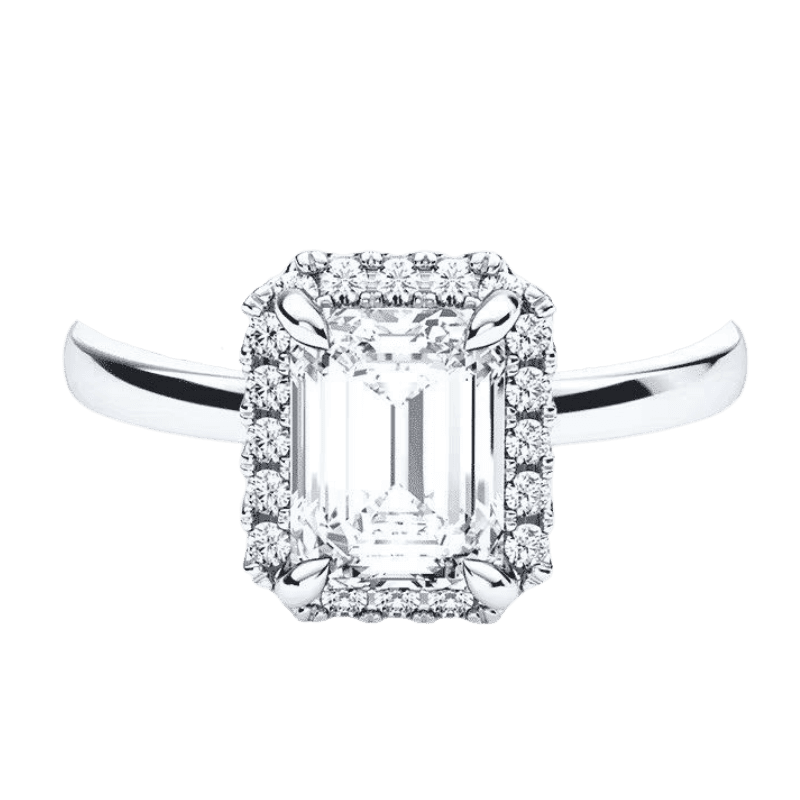
- Emerald Cut – the embodiment of clarity and sophistication. This shape especially emphasizes the diamond’s color and transparency.
- Radiant Cut – between classic and modern, characterized by a special sparkle. The Radiant shape can also highlight the diamond’s color.
Each shape reveals the diamond’s beauty differently, and a properly chosen shape can emphasize personality and a sense of style. Read more about diamond shapes.
How do diamonds differ from other stones?
A diamond is an exceptional gemstone that differs from other stones not only in its origin but also in its unique properties. Every diamond is either natural or can be created in a laboratory, but in both cases, it possesses extraordinary hardness—according to the Mohs scale, diamonds are the hardest known stones, with a hardness of 10 points. This means that a diamond is resistant to scratches and remains flawless even after many years.
Another property that distinguishes diamonds from other gemstones is their ability to reflect and refract light. Due to a very high refractive index, diamonds shine brighter than any other stone—it is this brilliance and sparkle that give a brilliant its unique beauty. Diamonds can come in various shapes, colors, and sizes, and their appearance depends on chemical composition and crystalline structure. A diamond is characterized by a cubic crystal lattice, which determines its exceptional strength and optical properties. Furthermore, diamonds are a symbol not only of luxury but also of eternity, loyalty, and exclusivity, which is why they are valued worldwide. Every diamond is unique, and its properties determine how it differs from other stones.
What determines the price of a diamond?
The value of a diamond is determined by 4 main criteria, called the 4C system—Carat (weight), Color, Clarity, and Cut. Each of them has a significant impact on both the price and the visual impression. It is important to mention that one or another criterion can have a decisive influence on the diamond’s price.
1. Diamond Carat
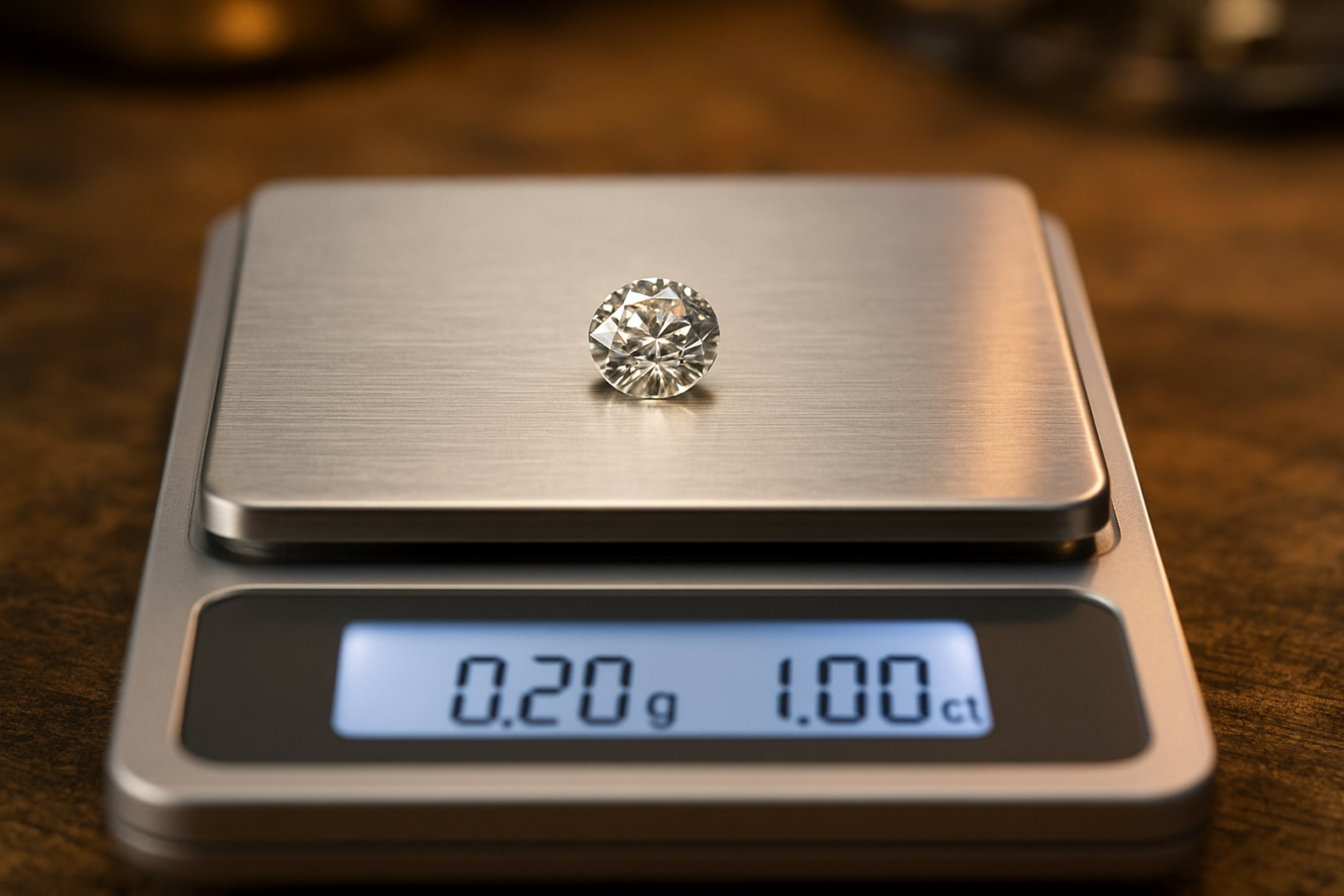
The weight of a diamond is measured in carats. One carat is equal to 0.2 grams. The higher the carat number, the rarer and more valuable the stone. However, it is worth remembering that two diamonds of the same weight can cost very differently if their clarity, color, or cut differ.
2. Diamond Clarity
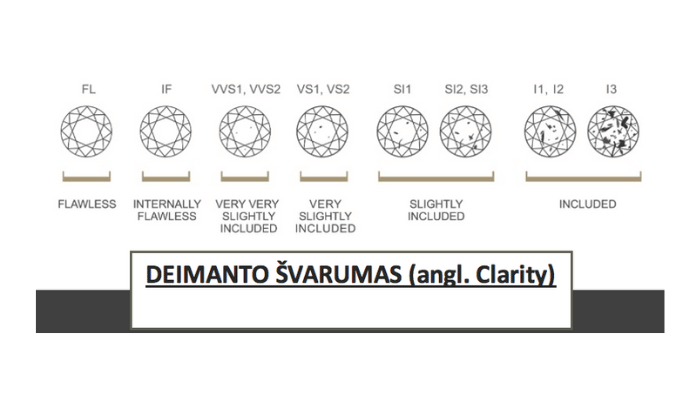
Clarity describes how many internal (inclusions) or external (scratches) imperfections a diamond has. A completely transparent stone without defects is extremely rare and therefore more expensive. Depending on the level of clarity, a diamond looks different: the fewer inclusions, the brighter it sparkles and the clearer it looks.
Diamonds are classified from FL (Flawless)—without any inclusions, to I3 (Included)—when inclusions are visible to the naked eye. For example, VVS1–VVS2 grade diamonds have barely visible inclusions, making them considered extremely valuable.
3. Diamond Color
Color is another very important factor.
According to the GIA classification, the letter “D” marks a perfectly colorless diamond, while “Z” marks a stone with a yellow or brownish tint.
The less color, the higher the diamond’s value. However, some buyers also choose colored diamonds—yellow, blue, or pink, which are considered extremely rare and collectible. Such colored diamonds are called fancy diamonds—they stand out for their color saturation, uniqueness, and rarity, making them highly valued.
4. Diamond Cut
The cut of a diamond is the work of a master, which determines how the stone reflects light.
Even two diamonds of the same mass, color, and clarity can differ significantly in price solely due to the different quality of the cut.
Only an ideally cut (Excellent Cut) brilliant creates maximum sparkle and a lively glow. After polishing, the diamond already acquires its final sparkle.
Therefore, the cut often has the greatest influence on the price of a brilliant.
Diamond certificates and quality guarantees
Diamond certificates are the most important document ensuring that the purchased stone is real and meets the declared quality. Such certificates are issued by internationally recognized laboratories like GIA, IGI, or HRD, which independently evaluate each diamond according to strict standards. The certificate specifies the diamond’s color, carats, clarity, cut, and a unique identification number, which is often laser-engraved on the stone itself.
Brilliants and diamonds certified by GIA or IGI laboratories guarantee that their quality is impeccable and all parameters are clearly defined. This allows the buyer to be certain about the value and authenticity of the purchased gemstone. Without a certificate, the market price of a diamond has no basis, so when choosing a diamond, it is always important to ensure that it is certified and meets all quality requirements.
How to recognize a real diamond?
A real diamond can be accurately distinguished from imitations only with special equipment. To determine if a diamond is real, professional devices and international certificates are used to confirm the stone’s authenticity and evaluate its properties.
In jewelry stores like Fashion Gold.lt, every diamond is certified by GIA, IGI, or HRD laboratories, indicating exact parameters and confirming the stone’s authenticity.
It is important to know that laboratory-grown diamonds have an identical chemical and physical structure to natural ones, but their origin is technological rather than geological. They are more environmentally friendly and often cheaper.
The origin of the diamond – from the depths of nature to your hands
Natural diamonds formed more than 3 billion years ago, at a depth of 150 km below the Earth’s surface. From there, they reached the surface through volcanic processes. Today, the main diamond mining countries are Botswana, Canada, Russia, and South Africa.
The origin of diamonds and other gemstones differs—diamonds form deep within the Earth’s depths, while many other gemstones form under different geological conditions.
Every stone that reaches a jeweler’s hands goes through a long journey—from ore to a perfectly cut brilliant that adorns an engagement ring or a diamond band.
Buying a diamond: how to choose the perfect brilliant?
When choosing a diamond, it is important to know that a diamond is not only a piece of jewelry but also a long-term investment. Every diamond is unique, so its value depends on many factors. First, pay attention to all the “4C” criteria: carats, color, clarity, and cut. Each of these aspects affects how the diamond looks and how much it costs. Before purchasing a diamond, always check its certificates—they ensure that the diamond is authentic and meets the declared quality. Poorly cut diamonds can lose their sparkle, so it is important that the facets are symmetrical and proportional. Diamonds are more than just jewelry—they symbolize feelings, beauty, and eternity. Every diamond is unique, and its value depends on the clarity, color, and cut quality, so choose responsibly and consult with specialists.
Investment diamonds
Investment diamonds are exceptional stones whose quality meets the highest standards. Such diamonds are not only of excellent color (usually D–F) but also characterized by high clarity (VVS1–VS1) and a weight from 1 carat and more. Investment diamonds are rare, so their value remains stable even during economic fluctuations. When choosing an investment diamond, it is very important to pay attention to the certificate, which confirms all the main parameters of the stone.
The price of diamonds depends on many factors—carat count, color, clarity, and cut quality. However, investment diamonds are a long-term value that can be passed down from generation to generation. It is a unique choice for those looking not only for luxury but also for a reliable investment that maintains its value over many years.
Diamonds not just for women: men’s jewelry trends
Diamonds are a choice not only for women but also for men. In recent years, more and more men are choosing wedding rings with diamonds because a diamond is a symbol not only of love but also of strength, stability, and confidence. Every diamond is unique, so men’s jewelry with diamonds looks exceptional and stylish. The price of diamonds depends on the carat count and the clarity of the stone, so every diamond is a valuable choice that remains meaningful over many years. Diamonds are not only jewelry but also an investment in beauty, feelings, and eternity—they are perfect for both women and men who want to emphasize their individuality and uniqueness.
Why are diamonds so expensive?
The price of diamonds rises not only due to their rarity but also due to the masterful processing process, which requires precision. From a large raw stone, only a small part becomes suitable for a brilliant, making the final product exclusive.
Other gemstones, such as sapphires, rubies, or emeralds, are often not as rare or valuable as diamonds.
Furthermore, diamonds symbolize eternity—they do not wear out, do not oxidize, and maintain their value for generations. It is not just a piece of jewelry but also an investment.
The value of the diamond in the future
Global demand for diamonds remains stable. People increasingly choose certified stones and value ethical origin and quality.
Every diamond is not only a creation of nature but also an emotional value—it symbolizes a special moment in life, a promise of love, or an important achievement.
Discover the world of diamonds at the “Fashion Gold” jewelry house
Want to know more about real diamonds, their value, and price?
Visit the “Fashion Gold” jewelry house at Pamėnkalnio g. 5, Vilnius.
Here you can see natural and laboratory diamonds, learn about their classification, choose a suitable ring, and receive professional consultation. Clients can choose from various diamonds according to their needs, considering shape, size, color, clarity, or certificates.
We can also organize an educational seminar at your desired location, where we will explain in detail what the price of diamonds depends on, how to distinguish them, and how to choose the most valuable gemstone.