How are pearls formed? In a mollusk, shell, oyster, or mussel?
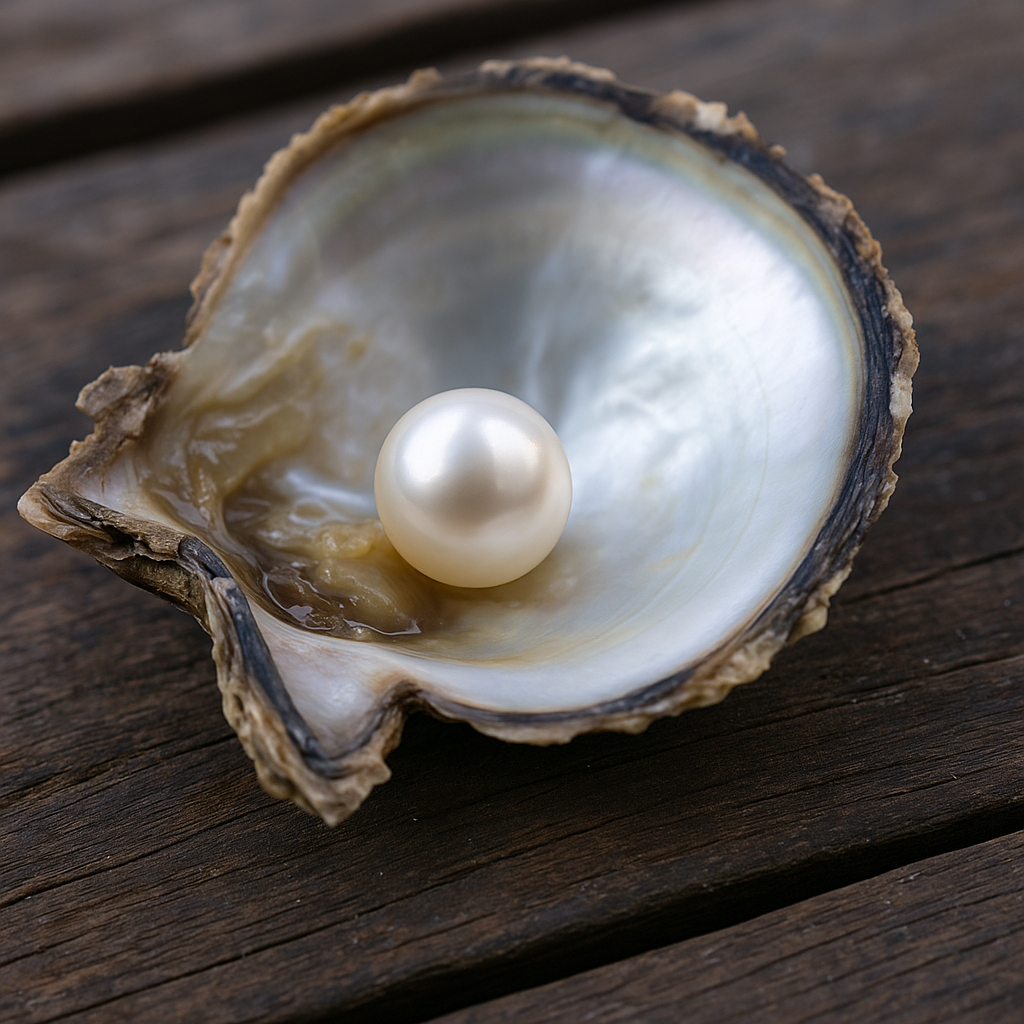
Pearls, what are they? They are a unique creation of nature, a gemstone of animal origin, a biogenic formation found in mollusk oysters. The appearance of a pearl is a mollusk’s protective reaction to a foreign body. A pearl forms as the organism’s defensive reaction to a foreign object, when the mollusk begins to cover it with layers of nacre (mother-of-pearl). Everything that enters the oyster – a grain of sand, a speck of dust, or a parasite – cannot leave and, over time, turns into pearls that bring joy and wonder. The mollusk secretes calcium carbonate, better known as nacre, and envelops the foreign body with it, creating pearls. During the formation of a pearl, complex chemical and biological processes take place that determine the pearl’s quality. Pearls are considered gemstones, ranking 4 on the Mohs scale. The origin and properties of pearls are known from scientific research, which helps to understand their formation processes. It is difficult to say when people first discovered an oyster and were surprised by the beauty of its treasure. However, it can be said for certain that today pearls are among the most popular jewelry pieces, which, according to fashion experts, should be in every self-respecting woman’s collection. Pearls come in various shapes, colors, and sizes, making every piece of jewelry unique. Shape is one of the most important criteria for evaluating pearls.
Types of pearls:
River pearls or freshwater pearls:
Natural river pearls.
Cultivated freshwater pearls.
Marine pearls:
Natural marine pearls.
Cultivated marine pearls:
- Japanese marine Akoya pearls.
- Australian or South Sea pearls.
- Tahitian or black pearls (Saltwater Tahitian Sea Pearls).
Pearl imitation. Artificial pearls are made from:
Majorica pearls, Swarovski pearls.
Plastic.
Glass.
Shell nacre.
Different pearls have different evaluation criteria depending on their origin, shape, and color. These pearls possess unique characteristics that determine their value and market demand. The main difference between cultivated pearl types: Marine pearls are grown in saltwater bodies, while river pearls are grown in freshwater; therefore, they are cultivated in various parts of the world and pearl types depend on the mollusk species. Natural pearls have almost disappeared from nature, so most pearls sold today are cultivated. Pearl sizes are also very important – pearls with a diameter of 10 mm are considered more valuable than smaller ones, and South Sea pearls can reach even 16 mm; pearls of this size are extremely rare and valued. The largest, roundest, and rarest pearls are the most valuable in the market.
A pearl is one of nature’s greatest wonders. Natural pearls are a rarity

In ancient times, pearls were highly valued, worn by kings, aristocrats, and other wealthy individuals. The pearl was called the king of gemstones; it is impossible to determine who discovered it, but it is believed that people searching for food by the seashore found pearls for the first time.
Pearls were given to the Chinese royal family as early as 2300 BC, and in Ancient Rome, pearl jewelry was considered the ultimate symbol of status. Round gemstones were so valuable that in the 1st century BC, Julius Caesar passed a law restricting the wearing of pearls.
The pearl held great significance in Arab cultures; legend claimed that a pearl forms from dew drops swallowed by oysters when they fell into the sea. The Persian Gulf was a center for the pearl trade and was long considered the country’s main wealth until the discovery of oil.
With such a long and ancient history, it is no wonder that over time, the pearl has been associated with myths and legends. In ancient China, pearl jewelry symbolized the owner’s purity, while in the Middle Ages, knights often took pearls into battle, believing the gemstone would protect them.
Pearls have been an important trade commodity since the Roman Empire, and the discovery of pearls in Central and South America in the 15th-16th centuries led to the so-called Age of Pearls. As demand grew in Europe, where nobles and royalty wore exquisite pearl necklaces, earrings, bracelets, and brooches, the demand for pearl jewelry became so high by the early 19th century that pearl supplies began to dwindle.
Unlike gemstones mined from the depths of the earth, a pearl is produced by a living organism, and its very existence is a wonder of nature. The growth of a natural pearl depends on the cleanliness of the seas and stable temperatures, which are changing due to pollution and global warming.
Today, natural pearls are classified as very rare gemstones, and their supplies are almost completely exhausted; they are very rarely found off the coasts of Bahrain and Australia. The rarity of natural pearls is reflected in their auction prices. Antique pearl necklaces and earrings fetch record sums of money.
Today, pearls are still highly valued in the jewelry industry and are a popular gift for special occasions. However, practically all pearls sold today are cultivated.
Why cultivated pearls are called – real pearls. Cultivated or grown?
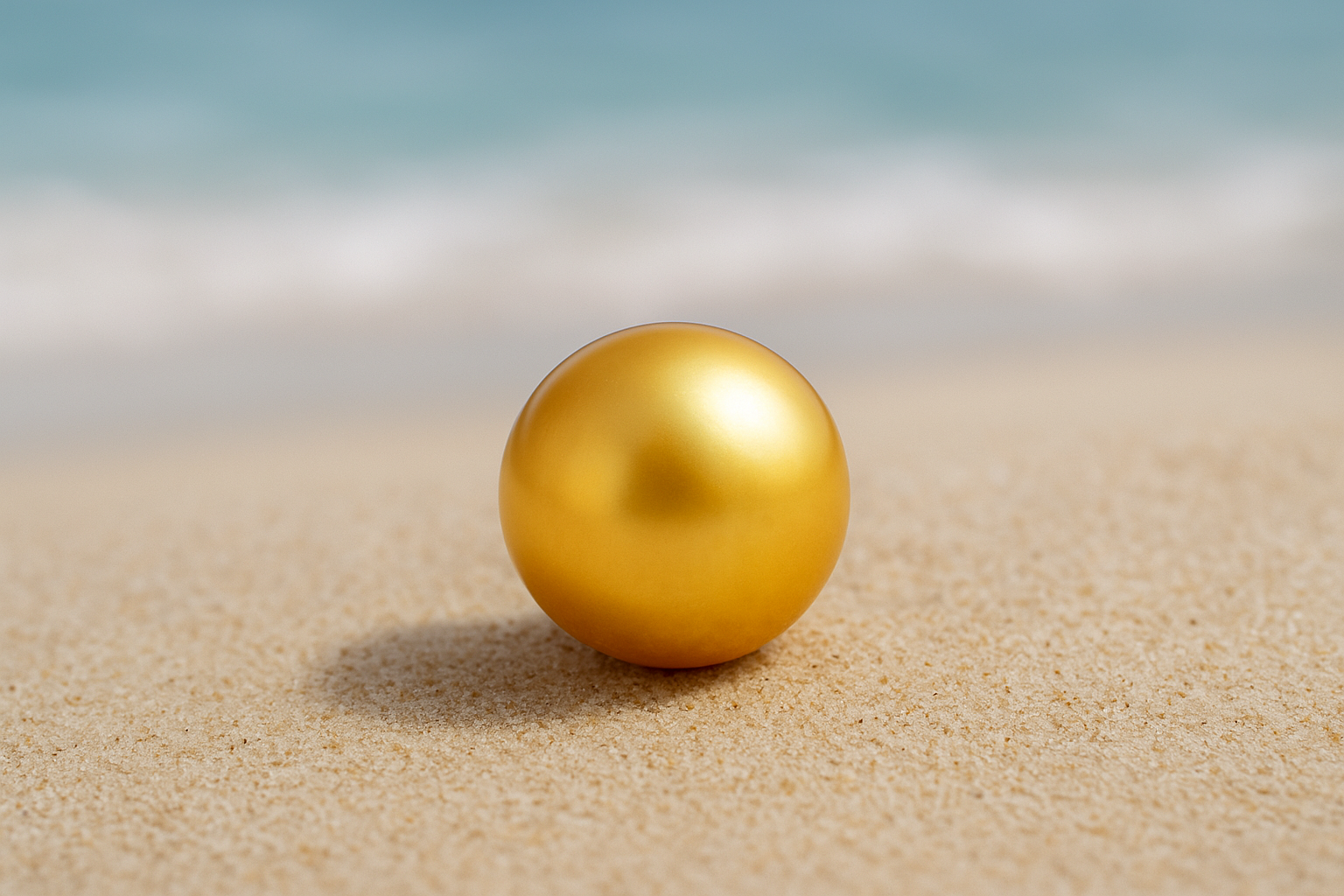
Cultivated pearls are grown in the same oysters, cared for and nurtured in every way. The difference is that the mollusk does not swallow a grain of sand, but a bead of the desired size made of shell inserted by a person, which it eventually covers with layers of nacre. The process can take place in both freshwater and cold or warm marine (salt) waters.
How are cultivated marine pearls grown?
Cultivated pearls are, in a sense, considered real pearls because the process of pearl growth inside the oyster occurs without human intervention; the oyster itself grows the pearls. When cultivating pearl varieties, human intervention in the process is minimal – a person creates a pearl nucleus of a certain size and shape. Then, this nucleus is manually implanted into the mollusk oyster, and the shell is sent to a pearl farm where it is attached to certain nets and left alone in the water. Over a certain period, the mollusk covers the nucleus with many thin layers of nacre. Later, the oyster is pulled out, and the precious pearls are removed. The main differences between marine and river pearl types: the luster of the pearl. Marine pearls always shine more; the reason is the salts that saturate seawater, which affect the chemical composition of the nacre and the pearl’s luster. The color of pearls depends on the mollusk species and the location of pearl growth. River pearls are valued less than marine pearls. Therefore, marine pearls cost much more than river pearls. The price of a marine pearl is sometimes significantly higher.
History of Pearls
Pearls are among the oldest and most valued gemstones in the world, with a history spanning thousands of years. Since ancient times, freshwater pearls, natural pearls, and exclusive Tahitian pearls have been considered special for their unique shape, color, and luster. Pearl types differ not only in their origin but also in evaluation criteria – from nacre thickness and luster to shape and size.
The first pearls were discovered in the Indian Ocean, the Red Sea, and the Persian Gulf. In these places, natural pearls were extremely rare and valued as the greatest treasure. Natural pearls form naturally, without human intervention, which makes them very valuable and considered a true rarity today. Meanwhile, cultivated pearls, although grown by humans, are also valued for their beauty and variety – they can come in various shapes, colors, and sizes.
The price of pearls depends on many factors: type, size, color, surface quality, and nacre thickness. For example, South Sea pearls are considered the most valuable – their price can reach up to 10,000 USD per piece. Tahitian pearls, famous for their dark, exotic colors, are also highly valued and can cost up to 5,000 USD. Simpler freshwater pearls are usually more affordable, but they can also be very beautiful and unique.
Pearls have long been used in jewelry making – earrings, necklaces, bracelets, and other pearl jewelry have always been considered symbols of luxury and elegance. Pearl shapes can be round, oval, teardrop, or even irregular, and colors vary from white, pink, and gold to dark gray or even black, as in the case of Tahitian pearls. Each pearl is unique, so pearl jewelry always remains fashionable and valued.
Today, pearls remain very popular and valued in the jewelry world. They are a symbol of not only beauty but also exclusivity, and their history and rarity give every piece of jewelry a special value. Whether natural or cultivated, pearls always remain a desirable choice for both everyday wear and special occasions.